Showing posts with label Stella Ndabeni-Abrahams. Show all posts

Friday, June 25, 2021

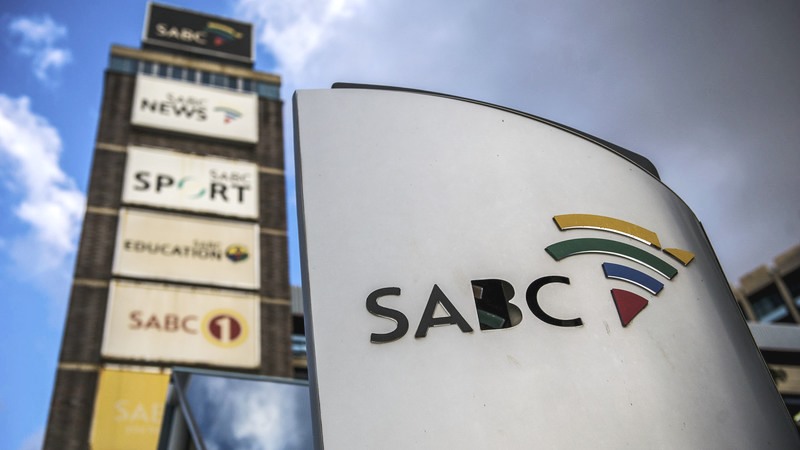
South African public broadcaster does a cobbled-together 'official' launch of SABC Sport as a TV channel complete with wooden benches on astro turf; says free sports could help drive digital migration push to DTT.


by Thinus Ferreira

On Thursday night the South African public broadcaster suddenly announced that it is "officially" launching its 24-hour SABC Sport channel at an amateur-looking launch event at its Auckland Park headquarters where a scattering of socially-distanced guests sat on wooden benches and astro turf.

Thursday night's "official" launch comes after SABC Sport had already been broadcasting "unofficially" for a while on eMedia Investments' Openview satellite TV platform and the SABC's digital terrestrial television (DTT) offering.

SABC Sport launched on 15 April 2021. On Thursday afternoon at 14:30 the SABC suddenly said in a belated statement that the public broadcaster would be "hosting a live broadcast of the official launch of its sports channel" at 19:00 on Thursday.

With little warning to media about it except for a few selected "outlets" as SABC chairman Bongumusa Makhathini referred to them, the SABC on Thursday night held an in-person "launch event" that it didn't bother to tell the majority of media about - similar to when it launched its latest version of the SABC News channel.

Neither the SABC's corporate affairs division under Gugu Ntuli, nor SABC Sport, afterwards issued any press release, press pack, basic channel logo, scheduling or anchor information, or any press release about what was said at the "official" launch event of the SABC Sport channel that a lot of media by Friday afternoon simply ignored.  

At the SABC's hagiographic SABC Sport official launch event on Thursday night some socially-distanced attendees sat on wooden benches on green astro turf and were served snacks by wandering waiters while presenters Vaylen Kirtley, Thomas Mlambo and Owen Hannie spoke from a stage.

SABC Sport has been available already on the SABC's DTT service, through e.tv's Openview decoder on channel 124, as well as on Telkom's TelkomONE video streaming service. 

SABC Sport is notably absent from MultiChoice's DStv and from StarTimes' StarSat satellite pay-TV services, with the SABC that wants to create and build its own televised sports channel brand similar to MultiChoice's long-running SuperSport brand.

Thursday night's "official" announcement tele-launch also included the announcement of the second team squad for the controversial Tokyo 2020 Olympic Games that is forging ahead despite intense criticism given the global Covid-19 pandemic and the rampant ongoing spread of the virus in Japan. 

Other upcoming content on the SABC Sport channel besides the Tokyo 2020 Olympic Games would feature friendly matches of South Africa's football team Bafana Bafana, as well as Premier Soccer League (PSL) games, the Confederation Cup, the Carling Black Label Cup, Formula E, the French Top 14, and also boxing matches and South African cricket, athletics and tennis.

"With the analogue switch-off planned for April 2022, the SABC believes that free sports content could be a significant driver in the final push for digital migration to DTT and satellite," Bongumusa Makhathini said.

"SABC Sport is a centre-piece in the SABC turn-around and renewal," he said.

Gary Rathbone, SABC Sport general manager, said that "Since the channel became operational in April this year, its audience figures have been positive, with latest TAMS figure showing a total reach of over 2 million, a 5% share of the national television market".

"On Openview alone, the channel has established itself amongst the top 10 on the bouquet, with a total reach of over 1.4 million, representing a 24% share of the Openview market. This is really positive start for an exciting new Sport channel that South Africans will be able to access without needing to pay a subscription."

Gary Rathbone said that SABC Sport will try to have broad sports content in order to speak to as many sports fans as possible.

"There also needs to be a mix between international content and local content," he said. He said SABC Sport is working on broadcasting "kasi-sports, school sports, women sports".

About the ongoing and latest fight with MultiChoice and SuperSport around the sub-licensing of sports content, for instance the SABC that said it won't show the upcoming Springboks and Lions rugby tour, Gary Rathbone told Vaylen Kirtley that "more should be done to help facilitate that access to that content on our platforms".

"We're not looking to try and acquire it in some sort of way and undervalue it in terms of the people that do put the money in, the hard-earned money, but there is ways and means to make it shareable, to make it accessible, to make it equitable in a way that helps us to grow out brand, helps us to commercialise the business that we're in and go out and buy better content and make better programmes."

A fawning Thomas Mlambo "interviewed" Stella Ndabeni-Abrahams, South Africa's minister of communications and digital technologies who bloomed under the studio lights as a wannabe TV presenter.

There was no semblance from Thomas Mlambo of even trying to ask kind of pertinent questions to Stella Ndabeni-Abrahams about the delay with DTT and the damage it's causing to the broadcaster, the SABC's struggle with sports rights and ongoing lack of government funding to pay for it, or her department's failures in helping the broadcaster with solving sport content issues.

Friday, March 19, 2021

South Africa's TV ratings system and broadcasters risk damage in new monthly analogue TV hard switch-off approach as signal transmitters are shut down in provinces before all viewers have switched to DTT or received set-top boxes.


by Thinus Ferreira

South Africa's TV ratings system risks getting damaged by the government's hard switch-off approach of analogue TV signal transmitters in communities across South Africa, which could leave millions of TV households without television access who haven't switched to digital terrestrial television (DTT) and who haven't received a free government set-top box (STB) or can't buy one.

It is estimated that there are more than 3 million South African TV households who are still on the analogue television platform.

These 3 million analogue TV households - in a new staggered monthly cut-off approach - are set to lose access to their TV signal over the next 9 months, with the process that could inflict damage to South Africa's TV ratings system and the so-called "TV households universe".

As a country South Africa has the most credible TV ratings system on the African continent for compiling daily, weekly and monthly viewership numbers for broadcasters and advertisers.

South Africa's TV rating system is the envy of other African markets where broadcasters, international TV channel distributors and advertisers are often forced to operate in the dark and have to make best-estimated guesses based on parsing other related marketing data and research in the absence of similarly comprehensive ratings data.

Now the credibility of the numbers-crunching used to compile ratings data for South African TV viewership is under threat after the country's department of communications and digital technologies have published a new list of analogue TV transmitters in various provinces being switched off, and that has started in the Free State this week.

The big issue is that the department - that is more than a decade late in completing the digital migration process from analogue to digital terrestrial television in South Africa - is now switching off analogue signals in succession in provinces but before all analogue viewers have actually switched over to digital TV. 

That will wipe an as yet undetermined number of TV viewers every month from now on from the total TV universe on which the current TV ratings metric is based and that is tallied using installed People Meters in homes across the country.

Meanwhile millions of DTT set-top boxes are gathering dust in South African Post Office warehouses that haven't been distributed to qualifying poorest households, with many more TV households who don't qualify for a free one and who have to spend their own money to buy an STB or new digital-signal enabled TV set.


Hard switch-off approach
The department's original digital migration plan stated that analogue transmitters won't be switched off before all viewers haven't been migrated to DTT successfully. The department has now switched to a "hard switch-off" approach where TV households simply lose access if they haven't switched and transmitters are switched off.

With the long-drawn-out process, the department and minister Stella Ndabeni-Abrahams, are under huge pressure to complete the DTT migration in order to make the dividend of frequencies available after the switch away from analogue TV for things like next-generation mobile data systems like 5G.

The Broadcasting Research Council of South Africa (BRCSA) as the custodian body of the country's TV ratings system hasn't yet responded to a media enquiry made earlier this week seeking comment about the potential impact on South Africa's TAMS and how the ratings system is going to be impacted.

Analogue viewers who don't have access to digital TV are who are getting cut off monthly will have to be removed from the existing TV universe data as well.

It's unclear how the BRCSA will have to change or adjust the existing TV universe when analogue-only TV households start to disappear and lose access to television in the real world.

Free-to-air broadcasters like the SABC with its SABC1, SABC2 and SABC3 channels, and eMedia Investments with its free-to-air commercial channel e.tv, are likely to be impacted the most if they have to adjust advertising rate cards to lower 30 second-ad spot pricing if ratings are lowered because the existing TV universe shrinks.

Stella Ndabeni-Abrahams on Tuesday in a statement revealed the new timeline for analogue signals to be cut and said that "it is anticipated that this process, which will be done province-by-province, will be completed by the end of March 2022".

On Monday the analogue TV signal was switched off in Boesmanskop and surrounding towns like Vanstadensrus, Zastron and Rouxville in the Xhariep District Municipality in the Eastern Free State near the Lesotho border.

That was followed on Tuesday by Ladybrand and the surrounding towns like Hobhouse, Tweespruit and Clocolan all losing their analogue TV signal. People who haven't switched to digital TV - mostly the poor people in rural communities - now have no access to television.

According to the department, the switch-off plans are to end analogue signals in the Free State by end of March 2021, Northern Cape by end of April 2021, Northern Cape by end of April 2021, the North West, Mpumalanga and Eastern Cape provinces by end of May 2021, Kwa-Zulu Natal by end of July 2021, the Western Cape by end of November 2021, Limpopo by end of December 2021, and finally Gauteng by end of January 2022.

"The department is collaborating with provincial governments and district municipalities to recruit local installers of government-subsided decoders in order to accelerate the implementation of the broadcasting digital migration," said Stella Ndabeni-Abrahams in the statement.

Poor households with a combined household income of less than R3 200 can get a free set-top box.

TV households who do not qualify for free government decoders have to buy an STB or an integrated digital television (IDTV) set that has DTT decoding capability built-in.

Wednesday, February 24, 2021

'A road to hell': South Africa's parliament told that a new TV tax on DStv and Netflix will make people more interested to watch SABC.


by Thinus Ferreira

The South African government's controversial plan for an expanded new TV tax described as "a road to hell" is gathering steam with claims that a law to force laptop and tablet owners as well as DStv, StarSat and Netflix subscribers to pay for the SABC will generate more money for the broadcaster and "will get people more interested in watching programmes of the SABC".

With only 24% - a falling percentage - of TV households still bothering to pay for a SABC TV Licence, the South Africa public broadcaster and the country's department of communications and digital technologies, are desperate to try and dig the struggling SABC out of its financial black hole through finding new additional income streams.

Part of the aggressive new plan contained in draft legislation from communications minister Stella Ndabeni-Abrahams, is to enlarge the fishing net of available SABC TV Licence revenue beyond the public broadcaster's own struggling collection fees division.

Changes to legislation would make private companies like pay-TV providers, as well as local and global video streaming services with a presence in South Africa, responsible for ensuring that their customers have a valid TV licence or to tack it on as a fee - whether those consumers watch the SABC or not.

Owners of tablets and laptops will also be forced to have and pay a SABC TV Licence whether they watch or consumer SABC content or not.

The initial inclusion of smartphones that was included in the plan as well has now been dropped from the Draft White Paper on Audio and Audio-Visual Content Services Policy Framework.


A grudge purchase
During an appearance of the SABC top executives and board as well as the department of communications before parliament's portfolio committee on communications on Tuesday and where the broadcaster shared details of its financial situation, it once again became clear how the vast majority of South Africans are going out of their way to avoid paying a SABC TV Licence.

A growing number of South Africans regard a must-buy SABC TV Licence as a once-off grudge purchase in order to buy a TV set. 

In 2019 the SABC had 401 321 new TV Licence holders who paid for one just to buy a TV set. Of them, only 68 093 bothered to pay for a first-time renewal when it was due after a year.

"This percentage of 17% of first-time SABC TV Licence renewals have been higher in the past, so clearly either the evasion rate or the attractiveness of the SABC's content did not speak to our audiences," Yolande van Biljon, SABC CFO told parliament.

Meanwhile, the SABC sits with a massive 76% SABC TV Licence "evasion rate" meaning that 76% of South African TV households that the public broadcaster are aware of and send a SABC TV Licence bill to, do not bother to pay their annual licence fee. 

Only 24% are still paying with the rate that keeps declining as the country's overall TV watching universe expands. 

Besides the SABC's TV Licence database there are millions more South African TV households with one or more TV sets that the SABC is not aware of and that don't have licences. 

There are also many millions more DStv and StarSat subscribers, as well as people with laptops and tablets, and a growing number of Netflix, Showmax and Amazon Prime Video subscribers.


'A road to hell'
On Tuesday Zandile Majozi, IFP MP, said "With the SABC draft bill moving for SABC TV Licence fees to the streaming services of Netflix - we support that. We believe it's a good strategy to begin with".

"It will generate more income for the public broadcaster and also it will get people more interested in watching programmes of the SABC".

Cameron MacKenzie, DA MP, warned that "we've seen a general public outcry at the minister's initiatives or ideas around collecting from Netflix and Showmax and MultiChoice and these other things of 'when you get a phone you must get a TV licence'."

"If you read the national mood, I think it will be very dangerous for any politician or any minister to go down in that direction - it really is a road to hell. I think we should stay well away from that," he said.

Pinky Kekana, the deputy minister of communications, said that "the industry is moving aggressively moving online and the SABC is trailing behind".

"The main goal is for us to declare the SABC as public service media. And once we do that, then it will be able to be competitive".

"If you look at the old TV1 which was predominantly English and Afrikaans, the old Springbok radio - they were well funded."


New 'public household levy' for the SABC 
She said that the South African government is looking at introducing a type of "public household levy that can assist the SABC to then have proper funding".

"We must initiate some of the discussions, mindful of what Cameron MacKenzie was saying. We can't fold our arms and say the status quo must remain when we know our public broadcaster is dwindling".

"These are the things that we should put in the public arena and look at whether government can fund the SABC directly from the fiscus or whether we can be creative in looking at the household levy".

Pinky Kekana said that "both from the department's side and from the SABC's side we're working very closely together to say, 'What are the options?' And these are not conclusive. Members can still look into some of those things, and indeed even when the amendments to the audio and audio-visual white paper engagement takes place".

Monday, December 21, 2020

Financially struggling SABC blows R2.3 million on public relations agency PR Worx in a new contract to try and repair the broadcaster's image as it duplicates SABC communications boss Gugu Ntuli's existing internal team that doesn't have all the skills and resources.


by Thinus Ferreira

South Africa's struggling public broadcaster that wants to retrench workers because of its absolute dire financial situation has splurged a shocking R2.3 million to pay the public relations agency PR Worx to clean up the SABC's dented image and damaged reputation, although the broadcaster internally has a fully-functioning corporate communications division and team.

According to South Africa's government, the SABC appointed PR Worx because the broadcaster's internal corporate communications team doesn't have all of the needed skills and resources.

Stella Ndabeni-Abrahams, South Africa's minister of communications and digital technologies, revealed that the cash-strapped SABC signed a new contract in July for R2.3 million with PR Worx for a year for so-called reputation management.

The IFP member of parliament Liezl van der Merwe why the SABC why it deemed it necessary to hire a PR company to do work for the SABC considering that the SABC does have an internal PR component and personnel.

Stella Ndabeni-Abrahams in a written reply answered that the SABC appointed PR Worx to "further add to the SABC's turnaround strategy, addressing and better managing its reputation and corporate image [that] is a priority for the broadcaster".

"The SABC therefore sought a suitably qualified and competent firm as the reputation management, corporate image building, and market research services that the SABC required were not available from an internal skill set and resource perspective," Stella Ndabeni-Abrahams said.

"All due diligence was performed and only when the SABC was satisfied that it had found a suitable service provider that understood the scope of work, and possessed the necessary experience to effectively execute the stipulated reputation mandate, was the contract awarded on 29 June 2020."

"The SABC then entered into an agreement with PR Worx as the agency of choice on 2 July 2020 for a 12-month period."

The SABC has a corporate communications division headed up by Gugu Ntuli, who got paid R767 000 according to the SABC's latest 2019/2020 financial report since her appointment from December 2019 as the SABC's group executive for corporate affairs and marketing.

Meanwhile, the SABC plans to retrench and wants to get rid of the entire group of programming publicists at its SABC1, SABC2 and SABC3 TV channels responsible for issuing schedules, publicity photography and programming updates to the country's press and to communicate with media.

It's not clear how the SABC plans to liaise with media about its TV shows without any publicists who all received retrenchment letters last month.

Last week, TVwithThinus asked the SABC why it wants to completely axe all publicists at all of its TV channels and why the SABC no longer sees this crucial job as important.

Gugu Ntuli said that "The current processes underway are exploring all options and I'm very certain that whatever has been tabled will be duly considered and the right structures will come into effect".

According to SABC insiders, who spoke on condition of anonymity, Merlin Naicker, the SABC's latest head of SABC Television, apparently wants "publicity" and marketing for all of the SABC's individual TV channels to shift to reside inside the corporate communications team headed up by Gugu Ntuli.

The understanding is that there would only be 2 media relations positions and a general, so-called "communications manager" or a job description to that effect.

It means that the SABC's corporate communications team would be made responsible for corporate communications, as well as SABC TV channels publicity and programming communication, that would all be done by just 3 or maximum 4 people.


South Africa's government that wants to force people to pay a SABC TV Licence fee for smartphones and tablets itself owes the public broadcaster R57.1 million in outstanding SABC TV Licence fees and advert payments.


by Thinus Ferreira

The South African government that wants to widen laws in a controversial proposal to force people to pay SABC TV Licences for tablets and smartphones and for video streamers like Netflix SA and pay-TV operators like DStv and StarSat to collect SABC licence fees from their subscribers, itself owes the struggling public broadcaster over R57.1 million in outstanding SABC TV Licence fees and adverts.

Stella Ndabeni-Abrahams, South Africa's minister of communications and digital technologies, in a written response from MP Phumzile van Damme of the Democratic Alliance (DA), revealed that the South African government owes the struggling and financially cash-strapped SABC over R57.1 million in outstanding SABC TV Licence fees payments and for advertising.

"A total of 20 national departments have outstanding SABC TV Licence fees balances," said Stella Ndabeni-Abrahams. According to Stella-Ndabeni-Abrahams, 126 provincial departments have outstanding licence fees.

Furthermore, a whopping "249 municipality accounts owe SABC TV Licence fees. A total of 57 SOEs have outstanding SABC TV Licence fees on their accounts," Stella Ndabeni-Abrahams said.

In addition, South Africa's government owes the SABC R29.2 million in advertising: 3 national departments owe R13.1 million, 24 provincial departments owe R9.2 million, 6 municipalities owe R2.3 million and 8 SOEs owe the SABC R4.5 million in payment for on-air advertising.

The Government Communications and Information Services (GCIS) owes the SABC almost a third of the debt in debt in advertising sales, with the Compensation Fund that owes the SABC R3.7 million in advertising payments and the eThekwini Metro that must still pay the SABC R1.1 million for advertising.

Previously only a third, but now less than a quarter of South African TV households still bother to pay their annual SABC TV licence with the percentage that keeps decreasing. 

In the SABC's latest 2019/2020 financial report for the struggling public broadcaster's revenue from SABC TV Licence fees declined 18% year-on-year to R791 million.

"This resulted in only 24% of the total licence fees bulled being realised as revenue, compared to 31% for the year ended 31 March 2019.

Thursday, November 12, 2020

TV NEWS ROUND-UP. Today's interesting TV stories to read - 12 November 2020.


Here's the latest news about TV that I read and that you should read too:


■ While Nigerian TV news channels insist that they're broadcasting #EndSARS footage from their own camera crews and not doing any false reporting, Nigeria's corrupt censorship body, the National Broadcasting Commission (NBC) again attacks the country's struggling broadcasters trying to do their job.

As the litany of shows cancelled by Netflix start to rack up, the streamer says it just makes "disproportionally" news when it cancels a show.

Tuesday, September 1, 2020

TV NEWS ROUND-UP. Today's interesting TV stories to read - 1 September 2020.


Here's the latest news about TV that I read and that you should read too:

■ MUST WATCH: American reporter at Weather Channel does Hurricane Laura stand-and-report saying "We want to make good TV for you guys" ... then gets hit by debris.

■ Erect penis shown on public British TV for the first time.

■ At Fox News (StarSat 261) the alleged sexual misconduct of the now-fired anchor Ed Henry was an open secret accusers say.

■ Australian anchor working for CGTN (DStv 409 / StarSat 266), Cheng Lei, detained by China and held in Beijing.

■ Opinionated Fox News style TV news channel planned for Britain.


■ The New York Times is dumping TV listings after 81 years, says it won't do away with covering television but will focus more on video streaming content.
A "final episode" for the NYT TV listings after 8 decades because newspaper is "firmly in the streaming age".

■  Russia Today (DStv 407) filler presenters popping up on Belarus state television after hundreds of staffers and presenters walked out in protest.

■ Ridiculous "over-cutting" is the curse of video streaming shows and ruining them:
"Just reactions shoehorned in everywhere, and fast cutting for no reason".

■ Nollywood blues: Nigeria's film industry has taken a massiv knock because of Covid-19.

■ Australian television says it has enough content amidst Covid-19 that caused many shows to suspend filming, but a lot are reality shows.

■ British TV dramas may look world class but Covid-19 has exposed a darker reality:
Depends largely on freelancers, with thousands of creative workers now all out of work.

■ Nigeria's government has the audacity to tell MultiChoice Nigeria as a private company that it's not allowed to fire any workers.

■ Facebook warns Australia that it will block any news being shared on its platform in that country.


■ A nightmare real-life fairy-tale: "A troll has taken over my DStv".


■ How The Crown on Netflix adapts its appearance as the British royal family changes over decades.

■ SABC radio DJ at Motsweding FM's Tumi Moetsi allegedly appointed irregularly to upgrade a water treatment plan in the North West province. (subscription required).

■ Zimbabwe's Zimbabwe Broadcasting Authority (BAZ) shortlists 14 applicants for new free-to-air TV licences.

■ Netflix cancels Altered Carbon. Here's why the second season was terribly bad.
Even as Netflix is on a cancellation spreek and axing shows like Altered Carbon, subscribers seem to remain loyal.

■ Leanne Manas, co-anchor of Morning Live on SABC2: "I always thought I was going to be a DJ".

■ Viewers are unimpressed with Netflix's Million Dollar Beach House.

■ eNCA (DStv 403) anchor Shahan Ramkissoon says he won't apologise for doing his job.

■ It's time for Stella Ndabeni-Abrahams, South Africa's latest communications minister and "one-woman wrecking ball", to be fired (subscription required).
"Is either a petty despot or clueless about her job."

Sunday, July 5, 2020

The ANC political party tells South African public broadcaster it doesn't want the bloated SABC to get rid of staffers.


The ANC summoned the top executives of the South African public broadcaster for a meeting at the ANC's headquarters in Johannesburg and told them that the political party doesn't want the bloated and over-staffed SABC to fire any workers.

The SABC has started for a second time to try and cut its enormous wage bill and to get rid of unnecessary personnel after the SABC was forced to end a first attempt in late-2018 because of political pressure in 2019 that was an election year in South Africa.

Currently, 40 cents in every R1 spent by the SABC goes to wages and salaries of its thousands of workers, dragging down the financial situation of the embattled broadcaster that got a R3.2 billion bailout earlier in 2020 and is projecting a loss of over R1 billion on its projected revenue for the year because of the Covid-19 coronavirus.

Now the SABC wants to fire 600 workers and told parliament's portfolio committee on communications and the ANC that if the broadcasting corporation is prevented from getting rid of workers the government will have to provide another bailout of over R1 billion to pay wages.

Currently the SABC spends over R270 million per month just on paying salaries.

On Sunday the City Press newspaper reported that Madoda Mxakwe, SABC CEO, and Bongumusa Makhathini, SABC chairperson were both summoned to the ANC's Luthuli House for a private meeting where ANC leaders told the SABC that it doesn't want and won't support the layoff of SABC staff since that would embarrass the political party which is also currently the governing party in South Africa.

The ANC was represented in the meeting with the SABC by Jessie Duarte (ANC deputy secretary general), Pinky Kekana (deputy minister of communication), as well as Solly Mapaila (SACP deputy leader).

South Africa's department of communications, currently run by the disgraced Stella Ndabeni-Abrahams, was initially for layoffs at the SABC but has now made a sudden turnaround.

Pule Mabe, ANC spokesperson, told City Press that it was a private meeting.

Saturday, April 11, 2020

Coronavirus: South Africa's transport minister Fikile Mbalula lays charge against reality TV star Somizi Mhlongo for allegedly spreading Covid-19 fake news.


by Thinus Ferreira

South Africa's minister of transport, Fikile Mbalula, has opened a case against the country's TV reality star and choreographer Somizi Mhlongo for allegedly flouting the 21-day Covid-19 coronavirus national lockdown regulations by creating and spreading fake news and misinformation.

Fikile Mbalula announced that he has laid a charge on Friday at the Sandton police station against the Idols judge and star of the reality show Living the Dream with Somizi on Mzansi Magic (DStv 161) who earlier this year shared his wedding build-up and ceremony on MultiChoice's Showmax streaming service in the series Somizi & Mohale: The Union

Somizi Mhlongo was charged in terms of regulation 11(5)(c) of the Disaster Management Act, in relation to publishing any statement through any medium including social media with the intention to deceive any other person about measures by the government to address Covid-19.

Fikile Mbalula laid the charge after a social media blow-up on Twitter on Thursday night when he and Somizi were both taken to task by the public.

It followed after Dineo Ranaka did an Instagram Live broadcast on Thursday morning in which Somizi Mhlongo was heard saying that Fikile Mbalula told him that president Cyril Ramaphosa would extend the country's national lockdown for a further two weeks before Ramaphosa made the announcement in his Thursday night live televised address.

Fikile Mbalula claims he never spoke to Somizi Mhlongo about an extension of South Africa's national lockdown situation, with Mhlongo who has since apologised on social media and said that he was just joking and that he "did not know about the extension just like everybody else" and that "I apologise to the minister for such a dangerous statement".

Fikile Mbalula said on Friday after he laid the charge,said that "The person who released the video, for whatever reasons, quiet clearly was being disruptive and that is why we forewarn people that do not play with the regulations and disinformation, information peddling and fake news".

"That information, how it was released [by Somizi] - it was meant to be disruptive. Because it [the announcement of the lockdown extension] was not released at the time it was recorded. When I was chatting to him that was recorded in the early-morning show. But it [the announcement of the lockdown extension] was released in the evening," said Fikile who spoke to the media at the police station's gate.

"Quite clearly there is a mischief there by somebody who did it. It was Instagram Live. That's how they did it in the studio and he spoke about me there. The person who released it is not dumb. He was doing it deliberately before the president speaks [sic], to agitate and mobilise the society to say that 'Aah,some of your cabinet members are sitting with their friends, wherever they are sitting, and they are leaking information," said Fikile Mbalula.


In a written press statement Fikile Mbalula said that "I have noted Somizi Mhlongo's apology, however I do not view his utterances as mere joke, the country is going through a serious disaster management period and any misinformation, irregular or unauthorised information being published is both unlawful and not assisting our cause to manage public affairs carefully".

"Even though Somizi Mhlongo guessed right in his speculative discussion - he went further to mislead the public about the source of his information which undermines and is preemptive on government and the president over very sensitive information of a national security caliber," saying that Somizi Mhlongo "has acted very recklessly and irresponsibly".

The Somizi Mhlongo case is the latest high-profile case this week of people who got into trouble for allegedly flouting rules of South Africa's national lockdown period.

While the country's communications minister, Stella Ndabeni-Abrahams, wasn't charged, president Cyril Ramaphosa this week placed her on 2 months "special leave", one month of which will be unpaid, after an image was posted publicly of her doing lunch at the home of South Africa's former deputy minister of higher education and training, Mduduzi Manana.

The Bachelor South Africa's bachelor Marc Buckner of the second season of the reality show screened on M-Net (DStv 101) said on Wednesday that he was allegedly arrested for allegedly violating the national lockdown regulations and fined R1 500 after he was walking back home from shopping.

Police spokesperson Brigadier Vishnu Naidoo told me on Friday night that he can’t confirm whether Marc Bucker was arrested or not but said if a member of the public receives a lockdown period fine and want to challenge that they’re welcome to go to court. 

 "A written J534 fine you don’t have to pay it if you feel that you have been in any way prejudiced or you feel that you were not given the fine justifiably. Then you can go to court and challenge that."

On Tuesday the Durbanville man, Steven Birch appeared in the Cape Town magistrate's court after a case was opened against him for allegedly spreading fake news about Covid-19. In a widely-shared video message on social media he falsely claimed that the South African government's coronavirus testing kits were contaminated and will infect people.


ALSO READ: Coronavirus: The SABC investigating Somizi Mhlongo over his Covid-19 'dangerous joke' fake news.

Wednesday, April 8, 2020

Coronavirus: South Africa's communications minister Stella Ndabeni-Abrahams placed on 2-months 'special leave' with one month unpaid after dinner-on-Insta event surfaces during Covid-19 national lockdown period.


by Thinus Ferreira

South Africa's recalcitrant communications minister Stella Ndabeni-Abrahams has been placed on 2 months of "special leave" by the country's president with one month which will be unpaid after an image was posted publicly by a former deputy minister of Stella doing dinner at his home during South Africa's 21-day national lockdown period.

South Africa's former deputy minister of higher education and training, Mduduzi Manana, posted a picture to Instagram of Stella Ndabeni-Abrahams and others having a meal at his house, saying "It was great to host a former colleague and dear sister cadre Stella Ndabeni-Abrahams on her way back from executing critical and essential services required for the effective functioning of our country during the nationwide lockdown."

Once criticism started, he deleted the Instagram post which was already shared widely.

Jackson Mthembu, the minister in the presidency will act in Stella Ndabeni-Abrahams' position the presidency announced. Cyril Ramaphosa reprimanded Stella Ndabeni-Abrahams but refused to fire her as other countries like Scotland and New Zealand did, and ordered her to make a public apology to South Africa.

Cyril Ramaphosa accepted Stella Ndabeni-Abrahams' apology for violating the rules of South Africa's national lockdown to try and curb the spread of the Covid-19 novel coronavirus in the country but says that he was "unmoved by mitigating factors she tendered".

"The nationwide lockdown calls for absolute compliance on the part of all South Africans. Members of the national executive carry a special responsibility in setting an example to South Africans, who are having to make great sacrifices," says Cyril Ramaphosa in a statement.

"None of us – not least a member of the national executive – should undermine our national effort to save lives in this very serious situation. I am satisfied that Stella Ndabeni-Abrahams appreciates the seriousness of what she has done and that no-one is above the law."

Cyril Ramaphosa says he disapproves of Stella Ndabeni-Abrahams' actions which he says "undermines the requirement that all citizens stay at home and save South Africa from the spread of the coronavirus".

Tuesday, April 7, 2020

Calls for South Africa's communications minister Stella Ndabeni-Abrahams to be fired as she flouts country's national lockdown rules doing dinner and photographing it for the public.


by Thinus Ferreira

South Africans on Tuesday called for the country's minister of communications, Stella Ndabeni-Abrahams, to be fired following her reckless "lets dinner-and-Insta" approach during South Africa's 21-day national lockdown period during which she went to a friend's house to have a meal and had the image shared on social media.

On Sunday Scotland's chief medical officer Catherine Calderwood was fired and asked to resign after she was spotted breaking her own advice to stay at home to help stop the spread of the Covid-19 coronavirus and visited her second home.

In New Zealand that country's health minister David Clark was demoted after he was caught out for visiting a beach when he drove his family 20km during that country's national lockdown period.

South Africa's former deputy minister of higher education and training, Mduduzi Manana, posted a picture to Instagram of Stella Ndabeni-Abrahams and others having a meal at his house, saying "It was great to host a former colleague and dear sister cadre Stella Ndabeni-Abrahams on her way back from executing critical and essential services required for the effective functioning of our country during the nationwide lockdown."

Once criticism started, he deleted the Instagram post which was already shared widely.

There's been no statement yet from Stella Ndabeni-Abrahams yet through her spokesperson Mish Molakeng.

President Cyril Ramaphosa on Tuesday said that he had seen the picture and what happened and that he had asked Stella Ndabeni-Abrahams to "come and see him so that we can discuss the impact of visuals like these. We want to instill a clear message about social distancing, that you must stay at home and don't go around on visitations," Cyril Ramaphosa said.

The Democratic Alliance (DA) member of parliament, Phumzile Van Damme, said that "I will be writing to president Cyril Ramaphosa this afternoon about Stella Ndabeni-Abrahams breaking lockdown rules. She is a leader and must set an example. I hope he takes strong actions against her."


UPDATE - Tuesday 7 April 2020 16:15: In a statement Phumzile van Damme says that "the statement by president Cyril Ramaphosa this afternoon indicating that he has summoned communications and digital technologies minister, Stella Nbabeni-Abrahams is simply not good enough". 

"He must set an example as the president of South Africa that lawlessness while our country deals with a global pandemic will not be tolerated, regardless of from whom it comes. He therefore ought to lay a criminal complaint against Ndabeni-Abrahams, a person who he appointed as a Minister and member of his Cabinet. And he must go a further step by removing her from his cabinet."

"President Ramaphosa addressed the nation twice asking South Africans to obey the law while containment strategies for Covid-19 were being implemented. The majority of the people of our country have done so with diligence." 

"Many have lost jobs and incomes while staying at home as he requested. Some have been brutalized by security forces for not obeying the law. He cannot expect that in these circumstances a mere slap on the wrist will suffice. Ndabeni-Abrahams must go!"

Monday, March 30, 2020

Coronavirus: MultiChoice adds the African Easter pop-up channel for DStv subscribers for the 2020 Easter weekend packaged by TBN Africa.

by Thinus Ferreira

MultiChoice will add a special Easter weekend pop-up TV channel for Christian viewers, packaged for its pay-TV service by TBN Africa that will launch on 9 April.

The African Easter channel will be accessible to DStv Premium, DStv Compact Plus, DStv Family and DStv Access subscribers on DStv channel 343 and will provide religious content to viewers who can't attend physical church services because of the national lockdown period caused by the rapid spread of the Covid-19 virus in South Africa.

The African Easter channel will broadcast content for various Christian denominations who observe and celebrate the Easter period.

The African Easter channel is packaged specifically for the millions of South Africans who have to stay home during the Easter Weekend with the channel that will broadcast music programmes, sermons, church services and religious programming until Easter Monday 13 April 2020.

Gospel artists whose music will feature include Lebo Sekgobela, Dr Tumi, Hillsong, William McDowell and Rebecca Malope, while the schedule will include timeslots for churches ranging from Methodist and Anglican to Catholic.

Pre-recorded faith-based messages submitted by churches will also run on the channel throughout the 4 days.

Lucky Mbiko, TBN managing director, says the channel is "partnering with churches, and some of the biggest gospel artists to bring you the best Easter worship experience to as many viewers as possible. Join us on the African Easter channel 343 on DStv for four days during the Easter Weekend.”

Calvo Mawela, MultiChoice Group CEO, says the pay-TV operator will assist millions of South African worshippers who regard the Easter time as a pivotal period of worship.

"As a responsible broadcaster, we are more than happy to partner with the department of communications and digital technologies as we afford worshippers to observe Easter from the comfort of their homes."

Stella Ndabeni-Abrahams, South Africa's minister of communications and digital technologies, says the department appreciates MultiChoice's response for an industry-wide intervention regarding religious programming on television over the Easter period that is accessible to South African viewers.

Sunday, August 4, 2019

After yet another SABC soccer blackout making the PSL's Absa Premiership matches unavailable, the South African government yet again responds by saying it will plan a meeting with the SABC, SuperSport and the PSL.


After yet another SABC soccer blackout making the Premier Soccer League' Absa Premiership matches unavailable on the South African public broadcaster and preventing millions of viewers unable to watch local football in their own country, the South African government responded as usual saying that it now plans to meet with the SABC, SuperSport the PSL.

Once again stunned into inaction, neither Nathi Mthethwa, South Africa's minister of sports, arts and culture, nor Stella Ndabeni-Abrahams, the minister of communications, had anything to say on Saturday when the PSL revealed that the latest Absa Premiership season won't be broadcast on the SABC.

The beleaguered SABC demanded a 96% discount on the price to acquire sub-licensing rights from MultiChoice and SuperSport that is showing PSL matches on the DStv satellite pay-TV service.

The ongoing, massive problem with sports rights remains unsolved by the South African government and the departments of sports and communications, who constantly - after a blackout crisis at the SABC - respond with a meeting, followed by some short-term plaster TV package on the gaping wound, and then nothing to solve the long-term systemic problems and bleeding.

On Sunday, Nathi Mthethwa -  a day after the SABC revealed an hour before kick-off that it won't show any matches of the PSL's Absa premiership season - said (like clockwork) that the department of sports it will be having an urgent meeting with the department of communications, SuperSport, and the PSL.

As in the past, the result will very likely be that somehow some PSL Absa Premiership matches of the new season would be made available on the SABC in some patched-programme fashion.

Longterm however, the South African government and ministers of sport and communications will likely simply kick the can down the road as keeps happening, with sports rights and soccer matches an ongoing contentious issue and with the government that remains unable and unwilling to put in place real-world solutions to prevent blackout recurrences.

"The minister will be convening a meeting soon‚ commencing first with consulting individuals and then meeting with everybody concerned at a later stage‚ said Mickey Modisane, from South Africa's department of sports.

"The minister is indeed disappointed that millions of South Africans who don't have access to pay-TV were not able to watch the opening round of PSL matches. It has been brought to the minister's attention and he has made an undertaking that he will be consulting with all relevant stakeholders in finding a lasting solution to this current situation."

"Once all parties have met with the minister‚ it is only then that we will be able to make an informed determination on whether this situation could have been avoided."

"The minister hopes that all parties will make themselves available for this matter that is of high priority and needs urgent attention. The minister will be meeting all relevant parties upon their availability to engage them‚ finding a solution on Tuesday might be impossible‚" Mickey Modisane said.

On Tuesday Bidvest Wits plays against Baroka FC in Johannesburg in the Absa Premiership, and Highlands Park will play against Maritzburg United in KwaZulu-Natal on Friday.

Earlier in 2019 the SABC failed to show the Banyana Banyana soccer matches at this year's Women's Soccer World Cup and the SABC also failed to broadcast the 2019 Two Oceans Marathon.

The SABC failed to broadcast Bafana Bafana's Africa Cup of Nations qualifiers‚ and there is no deal in place between SABC and the South African Football Association (Safa) before Bafana Bafana embarks on qualifiers for the 2021 Africa Cup of Nations and the 2022 Qatar World Cup in the coming months.

Sunday, July 28, 2019

Treasury orders the South African public broadcaster to take action against corrupt executives, sell off 'non-core assets, scrap non-performing activities and recoup expenditure on content if the SABC wants access to bailout billions.


South Africa's National Treasury has ordered the beleaguered South African public broadcaster to take action against former corrupt executives like CEO James Aguma, COO Hlaudi Motsoeneng and even the former communications minister Faith Muthambi before Treasury would give the SABC access to the billions in another bailout the broadcaster is urgently seeking.

The SABC has also been ordered to sell off "non-core" assets, scrap underperforming operations and to recoup expenditure on content.

The Sunday Times on Sunday reported that one of the stringent conditions Treasury has imposed on the SABC in order to get money from the government's emergency reserve fund, is to investigate and take action against former executives and others implicated in corruption and mismanagement.

The SABC is in dire need of at least R3.2 billion in the short term and over R6 billion over the long term.

Treasury ordered the SABC to report on what the financially destroyed broadcaster is doing to hold corrupt executives and others to account who mismanaged and ran the SABC into the ground.

It means that James Aguma, Hlaudi Motsoeneng, Sully Motsweni, Thobekile Khumalo, Faith Muthambi and others could face possible civil and criminal legal action from the SABC.

South Africa's National Assembly in parliament this week approved the Appropriation Bill of Tito Mboweni, minister of finance, allowing for the South African government's contingency reserve funding to be used to give another bailout to collapsed state-owned entities like Eskom, South African Airways (SAA) and the SABC.

It's however not clear when the SABC will actually receive any bailout money, or how much it will be.

Earlier in July Stella Ndabeni-Abrahams, the current minister of finance, lied to the South African public and the country's TV and broadcasting industry and said that the SABC would receive "interim financial relief from Treasury within 10 days", with the balance of the bailout request 45 days after that.

This didn't happen.

Earlier this week Treasury revealed in parliament that it ordered the SABC by letter in April 2019 to meet 11 conditions before it can access the R3.2 billion bailout money it asked for, Dondo Mogajane, Treasury director-general, said on Wednesday in parliament.

These conditions he said "relates to getting the SABC in order so that it can sustain itself financially".

Other conditions imposed on the SABC by Treasury before it can get bailout money include the SABC identifying which "non-core" assets it has that can be sold off and when this can happen, as well as internal revenue-raising plans.

Other conditions are that the SABC has to identify and scrap non-performing activities and remove non-core operations, that the SABC must maximise advertising opportunities and advertising revenue, and that the SABC must somehow get a return on the investment on the expenditure on content.

Sunday, June 23, 2019

Fears mounting that the SABC that is on the edge of imminent collapse, will be forced into a national broadcasting blackout over not getting its long-delayed bailout.


Fears are growing that the SABC on the edge of imminent collapse will be forced into a national broadcasting blackout with the South African public broadcasting still unsure of whether it will be able to pay salaries at the end of June or when the money of a billion rand government bailout will bring relief.

Stella Ndabeni-Abrahams, the minister of communications met with the SABC board on Friday but there is still no certainty at all as to when the SABC will get the first tranche - around R3.2 billion of around R6.8 billion that is needed and has been asked for - of a bailout from the South African government.

Meanwhile the SABC is inching ever close to having its broadcasting operations completely seize up with no guarantee that its over 5 000 staffers will be paid by the end of the month.

The SABC is no longer able to pay for basic services like electricity from the City of Johannesburg and has mounting debts of over R1.8 billion that is payable to service and content providers.

Stella Ndabeni-Abrahams on Thursday evening made a promise that the "SABC is not going to get any blackout" but insiders are extremely worried and concerned about how she will prevent this since there's been no money forthcoming with the SABC that needs to run its payroll from the end of the coming week.

According to Yolande van Biljon, chief financial officer (CFO), the SABC's "Day Zero" - when it will be forced into a shutdown and be unable to broadcast - can happen any day if the slightest thing go wrong operations wise at the beleaguered public broadcaster, or if service or content providers who are owed hundreds of millions of rand decided they want their money and will no longer provide services, access and content to the struggling corporation.

The SABC owes hundreds of millions of rand to production companies and independent producers in South Africa who are massively struggling themselves to keep their companies afloat, pay their staffers, and keep active productions making episodes for the SABC running.

The Bemawu trade union at the SABC met with Madoda Mxakwe on Thursday this past week and told trade union members in an email that the ongoing problem with the SABC getting its bailout is because "the SABC is part of a collective of state-owned enterprises (SOEs) asking for a government bailout".

Saturday, June 22, 2019

Stella Ndabeni-Abrahams, South Africa's minister of communications, says the SABC is 'not going to get any blackout. That we promise'.


"You're not going to get any blackout. That we promise."

That is the promise Stella Ndabeni-Abrahams, South Africa's current minister of finance, made on the red carpet during an interview with SABC News (DStv 404) before Thursday evening's State of the Nation 2019 address by South Africa's president Cyril Ramaphosa.

The South African public broadcaster is hovering on the edge of financial collapse with Bongumusa Makhathini, SABC chairperson, who warned on Sunday that the a SABC blackout could happen at any moment.

The cash-strapped broadcaster has stopped paying its electricity bill and doesn't know how it will be paying its over 5 000 staffers at the end of June.

"I’m not sure how we are going to pay for salaries come end of June," Bongumusa Makhathini said in a report in The Sunday Times.

On Monday, Yolande van Biljon, the SABC's CFO, warned in an interview with SABC News (DStv 404) that the beleaguered South African public broadcaster's "Day Zero can happen tomorrow" and refused to confirm that SABC staffers will be paid at the end of June.

Yolande van Biljon said that the SABC owes R1.8 billion to hundreds of companies.

Months after the SABC asked for another bailout in the form of a government-guaranteed loan, no money has been forthcoming, with the process dragging on month after month. In February this year after his budget speech, Tito Mboweni, the minister of finance, revealed that the SABC now actually needs R6.8 billion as a bailout if it's to survive.

Media Monitoring Africa (MMA) has called the government's inaction to help the SABC "despicable" and said that it looks like "a direct attempt to crash the SABC".

The Right2Know Campaign in a statement is calling for urgent intervention to prevent an SABC blackout, saying R2K is "deeply concerned by the imminent possibility of an SABC blackout as a result of low cash flow and indebtedness".

Stella Ndabeni-Abrahams told SABC News that "We're now waiting for the team that is advising the minister of finance to give the go-ahead" for the SABC to get a bailout.

"As soon as the Treasury finalises their processes, SABC will continue with what you are doing. You are not going to get any blackout. That we promise," she said.

Right2Know Campaign calls for urgent intervention to prevent an SABC blackout, says a black-on-air scenario will be a violation of South African citizens' rights.


The Right2Know Campaign is calling for urgent intervention to prevent a blackout at the beleaguered South African public broadcaster, saying that a possible impending black-on-air scenario when the SABC finally seizes up and is unable to broadcast any further will be a violation of South African citizens' rights.

On Sunday, Bongumusa Makhathini, SABC chairperson, warned that the SABC is finally on the verge of collapse with a blackout that could happen any moment.

"I’m not sure how we are going to pay for salaries come end of June," Bongumusa Makhathini said in a report in The Sunday Times.

The SABC that is perilously close to no longer broadcasting hasn't paid for municipal services like electricity at the end of May, choosing to rather pay SABC staff salaries. The SABC now owes the City of Johannesburg more than R13.5 million.

The SABC that is drowning in debt owes the parastatal signal distributor Sentech R317 million and MultiChoice's sports content division SuperSport over R208 million. Beyond that the SABC also owes millions to other content providers like independent South African production companies.

Nothing has so far come of the SABC's plea for a massive R6.8 billion in another government bailout.

On Monday, Yolande van Biljon, the SABC's CFO, warned in an interview with SABC News (DStv 404) that the beleaguered South African public broadcaster's "Day Zero can happen tomorrow" and refused to confirm that SABC staffers will be paid at the end of June.

Yolande van Biljon said that the SABC owes R1.8 billion to hundreds of companies.

Media Monitoring Africa (MMA) has called the government's inaction to help the SABC "despicable" and said that it looks like "a direct attempt to crash the SABC".

R2K in a statement is calling for urgent intervention to prevent an SABC blackout, saying R2K is "deeply concerned by the imminent possibility of an SABC blackout as a result of low cash flow and indebtedness".

"This is especially so, given that the SABC finds itself in this unacceptable financial position after decades of underfunding and recent years of mismanagement and corruption as a result of maladministration and state capture under the combined leadership of dismissed SABC COO,  Hlaudi Motsoeneng, the former SABC board and Faith Muthambi, the former minister of communications".

"The current SABC is charged with a mandate to draw up and implement a sound turnaround strategy to resolve this long-standing problem. This cannot be done with a commitment from the Treasury to commit increased public funding."

"We call for a turnaround strategy that addresses the systemic and long-standing problems including bloated top management and duplication of roles."

"If the screens go dark at the SABC it will be a violation of the ordinary citizens' fundamental right to communicate since this will lead to the inevitable deprivation of the people's right to access information."

"R2K is encouraged by the commitment shown by Stella Ndabeni-Abrahams, minister of communications, to find an urgent solution to the immediate problem, including sourcing a bailout from Treasury."

"However, we urge all parties to find a lasting solution out of the financial quagmire that does not include yet another call by an state-owned enterprise for bailouts from an already depleted public fiscus."

"We call on the ministry, the current SABC board and the other roleplayers to take the public into their confidence in constructing a turn-around strategy and a rescue package that ensures that all interests are taken into account. Civil society too stands ready to assist our SABC," says R2K.

Sunday, June 16, 2019

NEWS ALERT. 'Communication blackout is imminent'. SABC issues dire warning of broadcast failure as it's unable to pay staff at the end of the month, didn't pay electricity and owes hundreds of millions to service and content providers.


NEWS ALERT - The South African public broadcaster that is finally completely without money on Sunday warned that it's on the verge of a total shutdown and that a "communication blackout is imminent" with the SABC that doesn't have money left to pay staffers at the end of June, is no longer able to pay for electricity and owes hundreds of millions to service and content providers ranging from Sentech to SuperSport.

While Stella Ndabeni-Abrahams, South Africa's minister of communications, has been jetsetting to Japan last week and after having had months to help the SABC out of its precarious situation, she had failed to solve the massive financial crisis of the South African Broadcasting Corporation.

Bongumusa Makhathini, SABC chairperson, on Sunday warned that the SABC is finally on the verge of collapse with a blackout that could happen any moment.

"I’m not sure how we are going to pay for salaries come end of June," Bongumusa Makhathini says according to a report in The Sunday Times.

"We have also not maintained any of our infrastructure and a communication blackout is imminent".

The SABC that is perilously close to no longer broadcasting hasn't paid for municipal services like electricity at the end of May, choosing to rather pay SABC staff salaries.

The SABC now owes the City of Johannesburg more than R13.5 million. The SABC is meeting with the Coty of Johannesburg again on Wednesday.

The SABC owes the parastatal signal distributor Sentech R317 million and MultiChoice's sports content division SuperSport over R208 million.

Beyond that the SABC also owes millions to other content providers like independent South African production companies.

Nothing has so far come of the SABC's plea for a massive R6.8 billion in another government bailout.

"We never had a blackout before, but if the funding doesn't come soon the possibility of a blackout is imminent," Madoda Mxakwe, SABC CEO said a month ago.

The SABC could either experience a blackout when it's electricity supply is cut off, content is simply no longer being received, or if SABC staffers down tools, go on strike or simply become no-shows when the SABC fails to pay them at the end of the month.

The SABC planned and started a process of mass retrenchment but buckled under political pressure before the general elections and was forced to abandon the process of firing up to 981 permanent staffers and 1 200 freelancers at the bloated public broadcaster.

Saturday, June 15, 2019

The South African government's department of communications changing to department of communications and digital technologies.


The South African government has announced that its department of communications will be changing to a new name of department of communications and digital technologies (DCDT).

South Africa's president Cyril Ramaphosa made the announcement on Friday.

This follows the merger of the department of telecommunications and postal services that has been folded back into the department of communications.

The department of communications was split into the department of communications and the department of telecommunications and postal services in 2014 by the then South African president Jacob Zuma and his corrupt government.

South Africa's industry, business and TV sector in 2014 slammed the split with both departments that continued to severely underperform and with the country little further in long-delayed switch and digital migration from analogue to digital terrestrial television (DTT).

The switch to DTT has already cost the South African government and the local TV industry billions and is more than a decade behind schedule with both departments that failed in advancing and completing the process.

The jetsetting minister Stella Ndabeni-Abrahams who was in Japan last week on yet another whirlwind global tete-a-tete will continue to lead the department of communications and digital technologies although she hasn't been hands-on in dealing with solving extremely acute and months-old problems like the cash-strapped South African public broadcaster.

The damaged and beleaguered SABC needs more than R3 billion in an urgent new government-guaranteed bailout, while the South African Post Office has been floundering, and many other areas requiring urgent intervention.

The merger of the department of communications and department of telecommunications and postal services are ongoing.

Wednesday, March 20, 2019

Convicted fraudster Rubben Mohlaloga finally fired as chairperson of South Africa's broadcasting regulator, Icasa.


The convicted fraudster Rubben Mohlaloga has finally been fired from South Africa's broadcasting regulator where he has been the chairperson of the Independent Communications Authority of South Africa (Icasa).

Rubben Mohlaloga has been kept on and served as chairperson of Icasa for months and got paid although he's been convicted and sentenced for fraud.

Rubben Mohlaloga was convicted of fraud and money laundering on 15 January 2018. He was sentenced to 20 years' imprisonment by the Pretoria Specialised Commercial Crimes Court on 14 February 2019 for money laundering and defrauding the Land of R6 million.

Last week South Africa's parliament finally decided to suspend Rubben Mohlaloga after months of being kept on in his position since his conviction and since he was appointed in December 2017, with his suspension that became effective from 15 March.

Stella-Ndabeni-Abrahams, South Africa's current minister of communications finally fired Rubben Mohlaloga by removing him from his position.

Stella Ndabeni-Abrahams' decision follows a resolution on Wednesday by the Nasional Assembly in South Africa's parliament. Icasa will now choose a new chairperson for the Icasa council.

South Africa's ministry of communications in a statement on Wednesday said that Stella-Ndabeni Abrahams "has, in accordance with section 8(3)(b) of the Icasa Act, No. 13 of 2002 given effect to the National Assembly resolution and removed Rubben Mohlaloga from office".

"In terms of section 6(1)(j) of the Icasa Act, a councillor who is convicted of, amongst others, fraud; is disqualified from holding office," said Stella Ndabeni-Abrahams in the statement, echoing what the TV industry, opposition political parties, industry experts and public broadcasting and media watchdog organisations have told the department of communications for months.