Showing posts with label Sir David Attenborough. Show all posts

Thursday, July 18, 2024

National Geographic commissions David Attenborough: Ocean feature film documentary exposing 'the biggest problems facing our ocean'.


by Thinus Ferreira

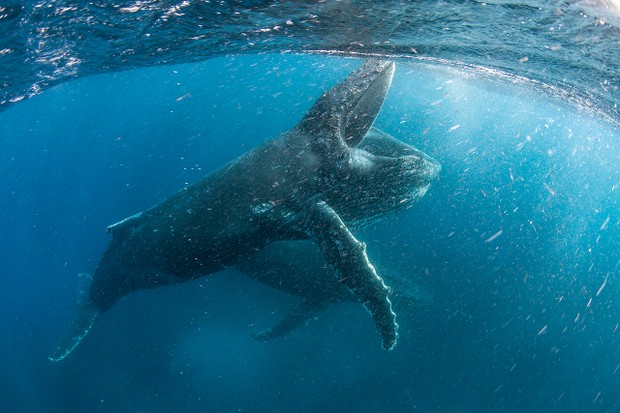
National Geographic has commissioned David Attenborough: Ocean (working title) as a new feature film documentary in which the famed natural history conservationist will be the presenter looking at "how we can, and must restore the glory of Earth's vast, interconnected waters".

National Geographic says "After nearly a hundred years filming every aspect of the natural world, Attenborough delivers his most powerful message yet".

David Attenborough: Ocean is produced by Silverback with the backing of All3Media International and National Geographic. The film will premiere in some theatres around the world before then premiering on linear television on National Geographic and then moving to Disney+.

David Attenborough: Ocean will be directed by Toby Nowlan, Keith Scholey and Colin Butfield.

It's produced by Toby Nowlan for Silverback and the executive producers are Louise Pedersen and Rachel Job for All3Media International, Tom McDonald and Janet Han Vissering for National Geographic.

"In this feature-length special, he draws on his lifetime of knowledge and experience to take us on a journey of wonder through the planet's most spectacular undersea habitats, revealing that we are currently living in the greatest age of ocean discovery, and showing beyond doubt that it is the most important place on Earth," says National Geographic.

"Cameras will film across the Americas, Europe, Africa and Oceania, capturing the practical and affordable solutions to reversing harmful human activity along coral reefs, mangroves, coastal communities, fish farms, marine sanctuaries and many other habitats in order to return the ocean to its most pristine and vibrant."

"While Attenborough exposes the biggest problems facing our ocean, his story is one of hope, and that in front of us is an opportunity for marine life to recover on a scale no one alive has ever seen before."

"It is clear without doubt that we can only stabilise the climate by restoring the ocean. David Attenborough: Ocean will amplify the solutions that are already at hand and ready to be immediately implemented to help turn the tide."

Sir David Attenborough, in the prepared statement, says "My lifetime has coincided with the great age of ocean discovery. Over the last hundred years, scientists and explorers have revealed remarkable new species, epic migrations and dazzling, complex ecosystems beyond anything I could have imagined as a young man".

"In this film, we share those wonderful discoveries, uncover why our ocean is in such poor health, and, perhaps most importantly, show how it can bounce back to life."

Tom McDonald, National Geographic's executive vice president of global factual and unscripted content, says "ThereThere is no-one better to deliver this landmark film than Sir David".

"I have had the privilege and pleasure of working with him many times over the past decade, and so I am, of course, personally and professionally thrilled that he has agreed to work with National Geographic for the very first time on a subject that is timely and close to his heart".

The underwater cinematographer Doug Anderson responsible for the BBC's Blue Planet and Our Planet will be the director of underwater photography of David Attenborough: Ocean.

Saturday, February 13, 2021

How Sir David Attenborough used duvet covers and sheets in his dining room to bring the BBC Earth's new natural history series A Perfect Planet to life.


by Thinus Ferreira

Unless you're one of his grandchildren the closest you'll get to Sir David Attenborough in the time of Covid is through Zoom and that's what happened when the narrator and producers switched on the cameras on their computers to talk and answer some questions about their new natural history series A Perfect Planet on BBC Earth (DStv 184), starting on Sunday 14 February at 16:00.

With the 94-year old Sir David Attenborough as the narrator, A Perfect Planet is a brand-new 5-episode natural history series from Silverback Films for BBC Earth, looking at how systems in nature - ranging from volcanoes, the weather, ocean currents and solar energy - affect and shape the world and all life on Earth.

"This year, perhaps more than ever, people are finding comfort and solace in the natural world. Whilst we may not be able to travel, we can take a few moments to enjoy our wonderful and diverse planet in this incredible footage," says the rusted, trusted, Voice of premium natural history series on television.

First in December 2020, and again in January, Sir David Attenborough - with some of the producers and cinematographers - got together to do roundtable interviews about this remarkable new series that has been over 4-years in the making and that filmed across 6 continents and 31 countries.


What a global pandemic is teaching us
"The remarkable thing about it," says Sir David Attenborough reflecting on the global Covid-19 pandemic, "is that it has made a lot of us actually suddenly become aware of the natural world in a way that we have not been before".

"In our busy lives, running around - moving here and there and everywhere - now we're stuck at home. Some of us are lucky enough to have gardens. This pandemic started last year. I've never listened to more bird songs in my life and I think that applies to a lot of people."

"We realise our dependency - emotionally and intellectually - on the natural world in a way that we've never done before."  


Voice-over maestro - with help from duvet covers
Pulling back the veil a bit on how Sir David Attenborough did the voice-over recordings for A Perfect Planet, series producer Huw Cordey says that the narration for two episodes was "done in a professional studio, but the other 3 happened during lockdown when David was shielding in his house".

"He just took the changes that we needed to do in his stride. So we recorded the commentary for three out of 5 of the episodes from his dining room."

"He sat in his dining room with a professional microphone and the walls covered in sheets and duvet covers to stop the sound bouncing around," says Huw. 

"Then we had a cable running from the microphone in front of him, out through his dining room window, into the garden, where the dubbing mixer recorded all these scripts."

"So we recorded 3 like that but Sir David just took it in his stride. It was completely different to how we normally do it but he didn't bat an eyelid. And actually, you won't notice the difference between the ones that were recorded in the studio and the ones that were recorded in his dining room".


About human nature
The final hard-hitting episode is themed "humans" who of course impacts Earth profoundly as well, with the episode that has a slightly different style and tone.

"Well, what can I say," says Sir David Attenborough when he's asked about ... us. "The first thing I keep reminding myself of is that there are 3 times more human beings on this planet now that when I first made a television programme".

"If we don't sort out how we deal with the planet, we're in trouble. The answer, of course, is that we can preserve the planet if we all behave in certain ways but to start, you've got to recognise the problem and that's what this last episode shows," he says.

Alastair Fothergill, executive producer, says that "Huw and I were very determined that humans as the last episode were very much part of the whole series, and we thought that A Perfect Planet is an extraordinarily timely series, in fact."

"You just have to look at the fires in Australia and California and the power hurricanes hitting America to question whether 'the perfect planet' has been upset by the dominant force which is humans. Throughout the series and particularly in the last episode we look at that, and of course, the big way that humans are changing the forces on our planet is the production of CO2."

Sir David Attenborough says humans have to "reduce our demands that each one of us makes on the planet - our demands in terms of what food we eat, and what we throw away, our demands in what we use for our power".


The beautiful soft glow ... of horrific Amazon deforestation
Cameraman Matt Aeberhard is responsible for filming the river turtles on the Bolivian border and drove for 13-hours to get there as he drove through Amazon forest getting chopped down.

"The turtle sequence itself is lovely - beautifully shot is wonderful, soft light," explains Matt. 

"But what doesn't come through the film is that the burning of the Amazon is happening everywhere. The beauty of the pictures, ironically, is brought to the fore by the softness of the light - which is caused by the burning smoke. So that's a real take-home for me."  

Huw Cordey says "the story of the turtles - they're very much affected, year on, by the changes of this global conveyor belt, this global ocean current, that is slowing down because of the melting sea ice. So by a large degree, the subjects choose themselves, but we are looking for the emotive subjects".


"There is a flamingo sequence that is one of the most memorable sequences I've seen on television," says Sir David Attenborough about Lake Natron, "shot under extremely difficult circumstances."

"It's impossible not to identify with these poor little chicks who have to make it from from the middle of this lake to the edge. But apart from that, it has been filmed so beautifully. My goodness, it's extraordinary."

The South African-born cameraman Justin Maguire filmed the rain frog sequence in A Perfect Planet but reveals he was actually scared that they might not find them during the time they had available.

"We were actually fearful than we might not see any frogs to film. Then we had a change of the weather conditions, we had the coastal mist start to thicken and come in, and you hear that very first distinctive call of the rain frog. It becomes very endearing when you get to know them. And we found our first frog."


Go inside waves breaking and tidal currents
Alastair Fothergill says he's really proud of the way in which the series filmed the various forces of nature. 

"It was a real opportunity to raise the photographic bar and some of the images of the volcanoes, some of the extraordinary images from within breaking waves, some of the beautiful weather images - I think are very, very fresh and really add to the landmark feel of the whole series."  

"There's a sequence I particularly love in this series of this extraordinary tidal current in Norway, it's one of the fastest tidal currents in the world. It looks like being inside a vicious washing machine underwater."

"Getting those images were pretty spectacular and seeing the eider ducks diving down in the swirling race to get to mussels is really special".

Huw Cordey says A Perfect Planet is really a series "about how the world works - how perfect it really is".

"I don't think people have had a chance to really appreciate that and now is as good a time as ever to really look and see how well everything fits together and how beautifully it's all connected. We have to see the planet as a globe - we can't see it as nation by nation. We have to see it as a whole."

"Until humans came along, especially the last 100 years, it has worked extraordinarily well and it can work again. A Perfect Planet is a celebration of the planet".


Watch A Perfect Planet from Sunday, 14 February on BBC Earth (DStv 184) at 16:00. The series will be available on DStv Catch Up as well.

Wednesday, April 10, 2019

Netflix faces backlash over David Attenborough's Our Planet documentary series as viewers recoil over shocking scene of walruses plunging to their death.


Netflix is facing growing pushback from viewers, as well as backlash from environmental critics, who are horrified over a scene of walruses filmed plunging to their deaths in the new Sir David Attenborough documentary series Our Planet that some experts have slammed as manipulative and saying Netflix is dishonest over the real cause of the animal's death.

Shocked and distraught viewers have been left in tears with many refusing to watch further following the harrowing now-called "Walrus scene" in the new Our Planet documentary series that many viewers are finding extremely distressing, unable to watch further.

In the gut-wrenching scene filmed in the Bering Strait between Alaska and Russia just south of the Arctic Circle, walruses fall off a cliff and plunge to their death because the Netflix documentary says they are unable to cope with climate change that has caused ice to melt and their natural habitat to shrink, driving the animals in large numbers to land where they can't properly fend for themselves.

Research and environmental critics have come out to say the Netflix narrative over the true nature of the scene is misleading and say that it was polar bears that drove the walruses to go over the cliff and wrong of Netflix to blame climate change for the walrus incident.

Netflix is standing by its depiction and reason for what happened.

In the scene many heavy walruses are filmed dropping to their deaths as they plunge over a cliff edge, some dying instantaneously, others bouncing and crushing those already below.


Sophie Lanfear, the producer of Our Planet, told The New York Times that the 'Walrus scene' was one of "the hardest things I’ve ever had to witness or film in my career", saying she wasn't prepared for the scale of death".

"What we think is going on is that the ones at the top can probably hear the ones in the water, and they can sense that there is water below. They teeter on the edge, and they just can't work out how to get down there."

"A small group of maybe six or seven would make it down safely, and we'd all celebrate. But the vast majority do not. They basically walk themselves off the cliff."

In a tweet on social media Sophie Lanfear addressed the criticism, saying that "the bears were not driving them off the cliffs".

In a tweet on social media, the Greenpeace co-founder, Patrick Moore, criticised the Our Planet scene, saying "This must be the most ridiculous thing ever ascribed to 'climate change' ".

Dr Susan Crockford, a zoologist, told The Telegraph that Netflix's narrative over the Our Planet scene is "contrived nonsense" and that "This powerful story is fiction and emotional manipulation at its worst".

"The walruses shown in this Netflix film were almost certainly driven over the cliff by polar bears during a well-publicised incident in 2017."

"Even if the footage shown by Attenborough was not the 2017 incident in Ryrkaypiy, we know that walruses reach the top of cliffs in some locations and might fall if startled by polar bears, people or aircraft overhead, not because they are confused by shrinking sea ice cover."


In a behind-the-scenes segment from the Our Planet series that Netflix placed on YouTube a cameraman in a voice-over says "there's probably two or three hundred dead walrus on probably a half mile stretch of beach here".

"They're exhausted because they're having to swim a hundred miles now to get to food and then coming back here because it's the only place to sleep. They used to sleep on the ice and dive down, eat the food and sleep on the ice. Easy."

"And now they’re swimming a hundred miles, coming to this place and climbing cliffs, getting exhausted and falling down and either being killed falling, or crushing each other because there's several thousands crammed onto little tiny bits of beaches."

While viewers have so far had both praise and criticism watching Our Planet, many said they have been left traumatised by watching after the harrowing 'Walrus scene" and won't be watching further.

"Do not recommend the new David Attenborough series on Netflix, just watched walruses fall down an 80m cliff (in slow mo) because they can't see where they're going well out of water and I'm emotionally unstable," wrote one.

Friday, November 16, 2018

TV REVIEW. Dynasties on BBC Earth with Sir David Attenborough is agonising, haunting - and painfully beautiful.


Of course, as basically a given, the arrestingly beautiful, masterful new animal series with Sir David Attenborough as narrator starting on Sunday on BBC Earth (DStv 184) at 16:00 will get a score of 5 out of 5 - but here is why you should watch although, yes, it will make you cry: The animals featured in this painfully-beautiful new series needs you to experience their personal struggle for their place in the world.

The sumptuous, poignant and meticulously filmed 5-episode Dynasties is yet another wildlife filmmaking television piece of art from the BBC Studios Natural History unit, this time following 5 animals - a chimpanzee, penguin, lion, painted wolf and a tiger as they struggle to not just defend their place in the world but in what has become man's world.

With a focus on families, an hour of Dynasties flies by with an immersive filmmatic experience and totally engrossing narrative into the animals' epic, daily struggle for survival, captured over hundreds of days and distilled into awe-inspiring stories of an hour each guaranteed to leave you as viewer emotional and moved.


With unexpected - often honestly shocking moments - narrated by Sir David's trusted, tempered and understated tone, beautiful and often heartbreakingly beautiful moments from nature flashes by, detonating emotionally compelling bombs you can't bear to watch, and yet simply can't look away from.

Sunday's first episode covering a troop of chimpanzees in south-east Senegal in West Africa quickly gives the viewer a very clear indication of what's in store in Dynasties: Without the need to antropomorphise, the viewer - consciously or unconsciously - gets a guttural and visceral assault on the senses. You understand what you see as a relatable struggle that humans can identify with.

More than just struggling to live and to stay alive, these animals' survival are intimately and intricately linked to others like them, but also to the (rapidly shrinking) physical space they inhabit and their place in the "hierarchy" within that space.

Unscripted, undiluted animal-world Greek tragedy plays out in Dynasties and just as unpredictable as nature is, so unpredictable is how episodes of the series unfolds. 

As the TV pendulum in Dynasties swings and alternates between heartbreaking and happy moments, the viewer gets a true sense of the never-ending power struggle these iconic animals are tied to every single waking moment of their lives, captured over the course of four years.

Just like the animals, while watching Dynasties, viewers don't dare let their guard down.

It's agonising. It's haunting. It's painfully beautiful. Which is precisely why Dynasties is absolutely must-watch television.


ALSO READ: 5 animals fight for survival in BBC Studios' 'cinematic, unpredictable and compelling' new natural history series Dynasties starting Sunday on BBC Earth.
ALSO READ: IN PHOTOS. The South African media launch of BBC Studios' amazing new natural history animal series, Dynasties, and IMAX press screening.
ALSO READ: 'Sir David Attenborough said he though we were mad': Here are 5 things about BBC Studios' beautiful new natural history series, Dynasties, you want to know. 
ALSO READ: INTERVIEW. 'We had an idea of what might happen. What actually did happen ... ' Rose Thomas, producer and director of the Dynasties chimpanzee episode, talks about her experience making the new BBC Studios 'Game of Thrones'-like natural history series. 
ALSO READ: The producer answers your burning questions about what you saw in in the first episode of BBC Earth’s Dynasties, and what happened to David the chimpanzee.

Thursday, November 15, 2018

'Sir David Attenborough said he though we were mad': Here are 5 things about BBC Studios' beautiful new natural history series, Dynasties, you want to know.


"Sir David Attenborough said he though we were mad."

So says Michael Gunton, executive producer of the new natural history series, Dynasties, from the BBC Studios Natural History Unit.

Dynasties starts this Sunday on BBC Earth (DStv 184) at 16:00, with the first episode that will also be shown at the same time on BBC Brit (DStv 120) and BBC Lifestyle (DStv 174) on MultiChoice's DStv satellite pay-TV service.

The 5 beautiful, harrowing, shocking, delightful, surprising and awe-inspiring episodes of Dynasties each follows a different animal around the world - from a chimpanzee, a lioness and a painted wolf in Africa, to a penguin in Antarctica and a tiger in India.

Here are 5 things about Dynasties you'd like to know.


1. Sir David Attenborough thought it was a mad idea
 "Dynasties is a much grittier journey into the natural world, but it's an important one," says Michael Gunton. "I came up with the idea about 5 years ago. With previous series like Planet Earth or The Blue Planet we normally use a God's eye view of the world."

"I wondered if there was another way of telling the stories of the natural world. We never really focused on seeing this moment in time where the animals are at a fork in the road, where their lives will change fundamentally depending on which direction they take."

"Of course it's quite a dangerous thing to embark on; if nothing of interest happens, you've got nothing to make a film. Say you're making Planet Earth II and you spend 3 months trying to film a lion hunt. If it doesn't work, it doesn't matter because you can go and film a tiger hunt or something instead."

"But if you decide you're going to spend all your efforts on just one particular chimpanzee troop, and specifically one individual, and the animal dies or nothing happens or filming permissions change, you're completely stuck."

"It's quite risky, and Sir David Attenborough said he thought we were mad. But while the risks were high, the potential benefits were also very high because if it sworks, the drama - the potential for true drama - is unprecedented."


2. Moving moments
"Every episode has very moving moments, where you see heroic struggles against the odds," says Michael Gunton.

"There are also extraordinary moments of connectivity where you absolutely empathise with the animals."


3. Animal nobility
"I hope that people will see these great charismatic animals in ways they've never seen them before," says Rupert Barrington, Dynasties series producer.

"By spending vast amounts of time time with each, our teams have been able to record what their whole lives are actually like, as opposed to just a single moment."

"They have watched these animals face up to immense challenges and great change with extraordinary resilience. What really comes through in the episodes is that for these animals, life is really, really hard."

"There's a nobility in how they act, whatever is thrown at them. I think because often they're struggling against universal challenges, you can't help but connect with their struggle. You feel for them - sadness at moments of tragedy and joy when they triumph."


4. Filming facts
Up to 100 km per day driven in search of tigers - 25 000 km in total - over halfway around the Earth.

309 days of filming for just the chimpanzee episode, 402 days filming the lion episode.

-44.3 degrees Celcius was the lowest temperature the crew experienced in Antarctica filming the penguin episode (62 days is how long the crew went without seeing the sun).

22 tyre punctures filming the painted wolf episode.


5. Incredible surprises
Dynasties delivers whopping - and often gut-wrenching - surprises right from the very first episode. Be warned, be delighted; be surprised.

"About the penguin episode says Lindsay McCrae, cameraman: "Over a period of days of a storm, the whole colony of penguins could shift quite a distance because they're constantly peeling off, which pushed them closer and closer to this gully."

"And then we had an almighty storm that prevented us from filming, and we thought, 'Crickey, what are we going to see when we get back there?' What happened next - well, I guess everyone will see when they watch the episode."


ALSO READ: 5 animals fight for survival in BBC Studios' 'cinematic, unpredictable and compelling' new natural history series Dynasties starting Sunday on BBC Earth.
ALSO READ: IN PHOTOS. The South African media launch of BBC Studios' amazing new natural history animal series, Dynasties, and IMAX press screening.
ALSO READ: INTERVIEW. 'We had an idea of what might happen. What actually did happen ... ' Rose Thomas, producer and director of the Dynasties chimpanzee episode, talks about her experience making the new BBC Studios 'Game of Thrones'-like natural history series.
ALSO READ: TV REVIEW. Dynasties on BBC Earth with Sir David Attenborough is agonising, haunting - and painfully beautiful.
ALSO READ: The producer answers your burning questions about what you saw in in the first episode of BBC Earth’s Dynasties, and what happened to David the chimpanzee.

Thursday, November 8, 2018

Netflix doing 8-episode natural history series, Our Planet, with David Attenborough as narrator.


Netflix is doing an 8-episode natural history documentary series entitled, Our Planet, with Sir David Attenborough (92) who will be serving as the narrator.

David Attenborough's latest natural history series, the 5-episode Dynasties, that starts this Sunday on the BBC in the United Kingdom, will kick off on BBC Earth (DStv 184) in South Africa on Sunday 18 November at 16:00 and is currently streaming on MultiChoice's DStv Now.

Our Planet is produced by Silverback Films that is run by Alastair Fothergill who created Blue Planet and Planet Earth for the BBC.

Our Planet, produced in conjunction with the WWF conservation group, will launch on Netflix on 5 April 2019 and will showcase Earth's most precious species and fragile habitats, revealing the planet as filmed using 4K-cameras, ranging from Africa and the jungles of South America, to the Arctic wilderness and the oceans.

Our Planet was filmed in 50 countries, using 600 crew members over the past four years.

"Our Planet will take viewers on a spectacular journey of discovery showcasing the beauty and fragility of our natural world. Today we have become the greatest threat to the health of our home but there's still time for us to address the challenges we've created, if we act now," says David Attenborough.

"We need the world to pay attention. Our Planet brings together some of the world's best filmmakers and conservationists and I'm delighted to help bring this important story to millions of people worldwide."

Alastair Fothergill says "Our Planet is our most ambitious endeavour to date, we hope it will inspire and delight hundreds of millions of people across the world so they can understand our planet, and the environmental threat it faces, as never before".

"The crew have ventured to all corners of the globe to capture breath-taking natural history sequences and using the latest filming technology to bring these never-filmed-before moments into people's homes."

"By launching on Netflix at the same time all over the world, this series will enable people to connect to and understand the shared responsibility we all have. We are genuinely all in this together."

Colin Butfield, WWF UK executive director, who is one of the Our Planet executive producers, says "We're the first generation to know the full impact of what we're doing to our planet, and the last that has the chance to do anything about it".

"I've never seen a natural history series that combines real stuff you've never seen before but that always has a really, really great narrative in each episode".

"It's not at all preachy, it's spectacular mass public entertainment, but by the end you are absolutely aware of the challenge of climate change and overfishing and deforestation."

Lisa Nishimura, vice-president of Netflix original documentaries, says "Our Planet is a phenomenal achievement by Alastair Fothergill, Keith Scholey and all at Silverback Productions, and a spectacular voyage of discovery around the world".

"We are delighted that Sir David Attenborough will voice the series and that Netflix, as a global platform, is able to bring this vital and magical series to an audience of over 190 countries worldwide next year."

Friday, January 5, 2018

Sir David Attenborough slams Bear Grylls over killing animals for TV entertainment on his survival show The Island on the Discovery Channel.


Sir David Attenborough has slammed the TV survivalist Bear Grylls over his merciless slaughtering of animals for the sake of TV entertainment in Bear Grylls' survival show The Island, saying unlike Grylls he wouldn't kill an animal to make compelling television.

The narrator of the upcoming Blue Planet II on BBC Earth (DStv 184) from 4 February who will also soon be launching a new nature conservation series on Netflix, told Britain's The Sun newspaper that Bear Grylls will "have to answer for himself" about the killing of defenseless animals on The Island with Bear Grylls.

"We’ve never killed an animal. Bear Grylls will have to answer for himself. But I wouldn’t willingly kill an animal just to get a shot," said Sir David Attenborough.

In The Island with Bear Grylls broadcast on Discovery Networks International's Discovery Channel (DStv 121) in South Africa and across Africa, contestants have slaughtered pigs, turkeys, iguana and now also caiman crocodiles, with viewers who are outraged over the killings done for television. 

The Royal Society for the Prevention of Cruelty to Animals (RSPCA) in the United Kingdom in a statement has said "The RSPCA opposes practices that cause animals pain, suffering or death in the name of entertainment. It's unacceptable and could easily cause great distress to the animals".

Previously People for the Ethical ­Treatment of Animals (PETA), said about the Discovery Channel show: “The Island is the result of some worn-out idea about showing crude dominance over the wonders of nature, a deep ignorance of who animals are and a callous disregard for life”.

PETA over the animal killings says “There was no reason other than a desperate quest for ratings to harm and torment.”

About his new Netflix conservation series, Sir David Attenborough says "Netflix want me to do something on conservation and have asked me to do it, and I’ve said I would. There’s certain things that the BBC can do and can’t do, and I can see some reasons why to do a programme on Netflix rather than the BBC”.

Monday, February 20, 2017

BBC back to the depths with a second season of Blue Planet later in 2017 with Sir David Attenborough as narrator.


The BBC is following up Planet Earth II with a second season of Blue Planet that it did in 2001, with Sir David Attenborough (90) who will be the narrator of Blue Planet II set to debut later in 2017.

The 7-episode series from the BBC' Studios Natural History Unit, previously called Ocean but now renamed Blue Planet II, returns to the world's oceans with footage captured the past four years.

The show will bring viewers new sea creatures and phenomena captured with new camera technology ranging from the polar seas and coral atolls to the ocean depths, as well as the methane volcanoes erupting in the Gulf of Mexico and the "boiling sea" in the Pacific Ocean.

Blue Planet II will show new creatures like the hairy-chested Hoff crabs, snub fin dolphins that spit water through the air and a tool-using tusk fish filmed for the first time.

The camera team also captured the sophisticated hunting between a coral grouper and a reef octopus and giant trevally catching flying birds in mid-air. Cameras also take a dive with a sperm whale mother and calf into the deep.

New camera technology used include ultra high definition (HD) so-called "tow cams" filming predatory fish and dolphins front-on, as well as special suction cameras recording the view from the backs of large creatures like whale sharks and orcas.

Two unmanned submersibles were also used, recording footage from 1 000 metres under the Antarctic Ocean.

In a BBC statement Sir David Attenborough says "I am truly thrilled to be joining this new exploration of the underwater worlds which cover most of our planet, yet are still its least known".

"The oceans are the most exciting place to be right now, because new scientific discoveries have given us a new perspective of life beneath the waves," says James Honeyborne, Blue Planet II executive producer.

"Blue Planet II is taking its cue from these breakthroughs, unveiling unbelievable new places, extraordinary new behaviours and remarkable new creatures. Showing a contemporary portrait of marine life, it will provide a timely reminder that this is a critical moment for the health of the world’s oceans".

Tom McDonald, the head of commissioning, at the BBC's natural history and specialist factual division says "Blue Planet II promises to combine the exceptional craftsmanship that our audiences have come to expect from BBC Natural History with genuinely new revelations about the creatures and habitats of the world's oceans".

"I have no doubt it will thrill and delight the audience and deliver a new benchmark in natural history film-making."