Showing posts with label Eskom. Show all posts

Thursday, May 25, 2023

MultiChoice: Eskom's Stage 6 electricity blackouts wipe out a third of SA's total TV viewership.


by Thinus Ferreira

MultiChoice sees a direct impact between the levels of electricity blackouts in the country and DStv subscribers, with the pay-TV operator that revealed South Africa's total TV audience gets slashed by over a third when Eskom is in a Stage 6 load-shedding phase.

Tim Jacobs, MultiChoice's chief financial officer, during the Q&A session of the pay-TV company's first MultiChoice Capital Markets Day held on Wednesday as a virtual event, said that the company can directly see how DStv subscribers and TV viewers in general in South Africa are bearing the brunt of Eskom's inability to keep the power on.

South Africa continues to be plagued by Eskom's ongoing electricity blackouts - locally referred to as "load-shedding" - oscillating between Stage 4 and Stage 6 and wiping millions of television households from the country's TV ratings system daily who watch the SABC, e.tv, or various StarSat or DStv pay-TV channels. 

"We see a direct correlation between the level of load-shedding and the impact on our customers," Tim Jacobs said.

"Once you get into Stage 6 load-shedding - where we've been for quite a bit of the second half of this last financial year - we see two direct correlations that we look at."

"The first one is we look at industry data which is independent of us, so when we have a look at the industry as a whole, at Stage 6 viewership dropped by 34%, whereas on the DStv platform we only dropped 12%."

"The second statistic that we use is the difference between what's happening to our 90-days subscriber base and our active subscriber base at any point in time. We are seeing a disconnect between these two where active subscribers have gone negative but we still see growth in 90-days subscriber base."

"What that tells us is that in our view - although people are under economic pressure and they are choosing tactically when to come and renew their subscriptions, they still want to be on the DStv platform. The 90-days - over a period of three months - that number is a lot higher than the active day subscribers.

"That means that our product is still resonating with customers. We're still comfortable that despite load-shedding customers will come back and we've had experience of this in Africa. In a number of markets in particular, if you look at Zambia and Zimbabwe, Ghana's had electricity problems, and all of these markets tend to bounce back quite strongly once those issues are resolved."

Friday, May 12, 2023

Former Eskom CEO André de Ruyter set for 2nd explosive TV tell-all Sunday night on Carte Blanche.


by Thinus Ferreira

Former Eskom CEO André de Ruyter is set for another explosive TV interview, this time on Sunday night with M-Net's Carte Blanche at 19:00 where he will answer questions about using an Apartheid-era spy to investigate corruption at the imploding state-owned power utility.

André de Ruyter made waves and then exited Eskom after a shocking sit-down interview with e.tv's Annika Larsen on 21 February during an edition of My Guest Tonight shown on e.tv, eNCA (DStv 403) and YouTube, with the much-watched interview that had massive ramifications for the South African government and the beleaguered power utility.

André  De Ruyter made multiple, jaw-dropping revelations, including that top-level politicians whom he refused to name, are directly involved in the looting and corruption at Eskom that had plunged South African into ever-worsening stages of electricity blackouts, something that Eskom calls "load-shedding".  

During the same week, e.tv's did a double-whammy, with an episode of the investigative programme CheckPoint exposing the shocking ongoing workings of the coal mafia destroying and milking Eskom of millions of rands per month from the inside.

It has since come to light that André De Ruyter commissioned his own sensational intelligence report to gather evidence and information about the rife and widespread corruption inside Eskom, orchestrated by a politically connected coal mafia operating inside Eskom.

Less than two months later, André de Ruyter has now done a follow-up sit-down TV interview which will be airing this Sunday night on the weekly investigative and current affairs show Carte Blanche on M-Net (DStv 101).

With producer Joy Summers, André de Ruyter, from a secret location - which is likely somewhere in Germany as the ANC political party is trying to serve legal papers on him for alleged defamation - talks to Carte Blanche presenter Bongani Bingwa about what has become known as "The Eskom Files".

From his international hideout André  De Ruyter will talk to Carte Blanche about his three years of trying to root out corruption at Eskom and to try and restore the power grid and alleviate South Africa's crippling blackouts.

Does he regret his tell-all interview with Annika Larsen? What was he thinking using an Apartheid-era spy for an internal investigation? Where exactly is he and why? These are some of the questions Bongani Bingwa puts to André  De Ruyter.

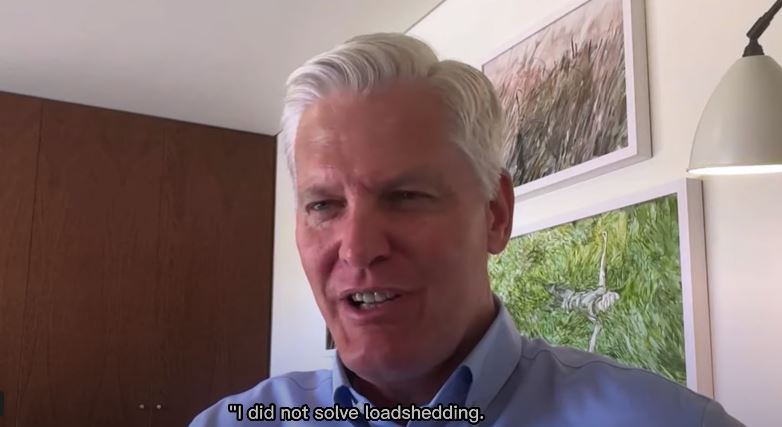
"I did not solve load-shedding. I did not address all of the corruption. But I did make a good start in solving energy security," André  De Ruyter says in a snippet of the upcoming interview released in a new Carte Blanche promo.

Tuesday, February 28, 2023

TV RATINGS January 2023: South African television loses another 2.5 million viewers due to Eskom blackouts while MultiChoice and Mzansi Magic's Big Brother Titans and Gqeberha The Empire are rating flops.


by Thinus Ferreira

After collectively wiping over 5 million TV viewers during primetime from the country's television ratings in December 2022 Eskom's ongoing electricity blackouts in South Africa up to Stage 6 load-shedding did further damage to the country's viewership which was down another 2.5 million viewers in January.

Meanwhile, MultiChoice's new season of Big Brother: Titans which started on DStv on 15 January, as well as the Tshedza Pictures telenovela Gqeberha: The Empire produced in the Eastern Cape and which started on 16 January on DStv, both had disappointing viewership premieres.  

Between SABC1, SABC2 and SABC3 collectively the South African public broadcaster lost another 2.53 million viewers in January from its top 20 shows.

eMedia's free-to-air commercial TV channel e.tv kept steady, showing a slight increase from 33 to 33.2 million viewers in January for its top-rated shows. 

In pay-TV, MultiChoice continued to shed thousands of DStv subscribers in January whose TV sets and decoders don't work when Eskom and cities leave suburbs powerless during Stage 6 loadshedding.

SABC1 lost another 1.81 million viewers across its top shows in January. Uzalo as the channel and the country's most-watched show kept steady with a slight viewership gain from 5.19 to 5.27 million viewers.

Generations - The Legacy in second place also held steady at 4.11 million viewers compared to December's 4.1 million viewers, while Skeem Saam as SABC1's third most-watched show gained viewers, going from 3.57 to 3.89 million viewers. 

The Zulu TV news bulletin made gains rising from 1.966 to 2.198 million viewers, while the Xhosa TV news bulletin rose from 2.053 to 2.194 million viewers. The country's 2022 matric results announcement on 19 January drew 1.813 million viewers.


Spidey snares viewers for SABC3 web
On SABC2 the channel's most-watched show Muvhango showed small growth, going from 1.548 to 1.66 million viewers as the channel's only show pulling over a million viewers.

Kgatelopele was flat at 784 283 viewers, compared to December's 786 740, with Afrikaans soap 7de Laan also flat at 775 339 compared to December's 764 955 viewers. The Afrikaans TV news bulletin declined from 616 357 to 568 255 viewers.

The Setswana TV news bulletin climbed from 484 646 to 545 338 viewers, while Morning Live held steady at 444 316 viewers. The Venda/Tsonga TV news bulletin drew 367 592 viewers.

SABC3 showed slight ratings growth in January, going from 519 808 viewers who watched the FIFA World Cup match between Japan and Spain December as the channel's most-watched number, to the Sunday night film Taken pulling 597 658 viewers on 22 January.

Spidey helped to prop up SABC3 in January, with The Amazing Spider-Man 2 luring 379 683 and Spider-Man 3 grabbing 372 941 viewers, while The Amazing Spider-Man and Spider-Man 2 caught 301 172 and 299 076 viewers in their webs respectively. The English TV news bulletin pulled 315 462 viewers, slightly up from December's 289 308.  


DStv's Big Brother: Titans and Gqeberha: The Empire flop
On the red letter channel its top show Scandal! ebbed slightly from 4.01 to 3.9 million viewers, while House of Zwide in second place held steady at 3.2 million from December's 3.12 million viewers, as did Imbewu in third place with 2.158 million viewers compared to December's 2.13 million.

The Black Door was slightly down from 1.85 to 1.73 million viewers in January, and Durban Gen was 1.63 to 1.53 million viewers. 

e.tv's 20:00 TV news bulletin went from 1.54 to 1.46 million viewers, while the Leon Schuster-fronted film Mr Bones was the channel's most-watched film for the month, grabbing 1.79 million viewers.

On pay-TV, MultiChoice's DStv continues to suffer declining ratings with its most-watched show Gomora on Mzansi Magic (DStv 161) down from 912 173 to 783 149 DStv subscribers who tuned in during January.

The telenovela Gqeberha: The Empire which premiered on 16 January during Stage 6 loadshedding had a disappointing 413 227 viewers at most during January. 

The latest Big Brother season with housemates from Nigeria and South Africa, Big Brother: Titans which also made its debut during Stage 6 loadshedding has also been a ratings dud, not rating well despite being shown on the Mzansi Magic, Mzansi Wethu and its own dedicated DStv pop-up channel.

The third season of Big Brother Mzansi a year ago in January 2022 still had a lowly 529 041 viewers but with little promotion and barely any PR support Big Brother: Titans has less than 330 000 viewers and couldn't even rate on the list as one of DStv's 30 most-watched shows during January. 

Isencane Lengane on Moja Love (DStv 157) drew 625 293 viewers in January while the channel's Uyajola 9/9 was down from December's 670 983 to 621 234 viewers. 

The Queen was down from 620 601 to 608 313 viewers. Diep City lost 30 000 viewers on Mzansi Magic, going from 553 799 to 523 354 viewers.

X-Repo on Moja Love dropped from 518 780 to 497432 viewers.

Thursday, February 2, 2023

Eskom blackouts wipe 5 million viewers from South Africa's TV audience.


by Thinus Ferreira

Eskom's relentless and increasing electricity blackouts in South Africa wiped out close to 5 million South African viewers during prime time from the country's TV grid in December 2022, inflicting ongoing damage to broadcasters who are losing not just audience but the advertising revenue they depend on, and causing havoc with ad buyers' campaigns.

The TV staple of South African television - locally-produced prime time soaps - collectively shed over 4.77 million viewers from November to December 2022 as Eskom's electricity supply continued to sag into late-2022.

These rolling blackouts mean that millions of South African TV households are left in the dark and cut off from their TV sets at nighttime due to Eskom's erratic and constantly changing "loadshedding" practices.

Between SABC1's Uzalo, Generations: The Legacy and Skeem Saam; SABC2's Muvhango; and e.tv's Scandal!, House of Zwide, The Black Door, Imbewu and Durban Gen which collectively represent the most-watched shows in South Africa, the country's available TV audience dropped by a shocking 4 776 251 viewers in one month as they disappeared from the available TV universe measured by television data.

Audience losses on shows on smaller channels like SABC3 and pay-TV service DStv added to the number of lost viewers because of the country's crippling electricity blackouts. 

According to the Broadcast Research Council of South Africa's (BRCSA) TV ratings data for December, SABC3's maximum audience decreased from 588 151 to 519 8080, while a show like Uyajola 9/9 on Moja Love (DStv 157), which was the most-watched pay-TV series in November with 904 082 viewers, shed over a quarter (25.78%) of its audience in just one month to plunge to 670 983 DStv subscribers watching in December.

Looking at biggest audience size for South Africa's terrestrial TV channels, SABC1 plunged from 5.6 to 5.1 million viewers in December, SABC2 fell from 1.72 to 1.54 million viewers, SABC3's already low 588 151 viewers dropped to 519 8080, while e.tv's maximum audience in December lost over 700 000 viewers, dropping from 4.78 million to 4.01 million viewers in December.

A slight drop in TV ratings is expected and does happen during December - since some households measured for South Africa's television audience measurement system (TAMS) and included in the people meter panel go on holiday, don't switch on their TV set and mirror what happens to the audience size during this period.

A massive five million viewership drop in one month however is not normal and extremely damaging and debilitating for broadcasters who lost ad revenue and for advertisers who lost out on the eyeballs they paid for but didn't get and wanted to reach with Christmas sales campaigns.

Tuesday, January 24, 2023

MultiChoice adds two DStv SWITCH'D ON pop-up content repeat channels to try combat South Africa's crippling Eskom electricity blackouts.


by Thinus Ferreira

Following eMedia that launched a Power-UP! pop-up channel on Openview on Monday 23 January with repeats to combat Eskom's electricity blackouts in South Africa, MultiChoice is also launching two pop-up channels, both called DStv SWITCH'D ON, on DStv, starting on Tuesday 24 January.

With the two DStv SWITCH'D ON channels, MultiChoice and M-Net will repeat various of its own, locally-produced shows from the Mzansi Magic, Mzansi Wethu and kykNET & Kie channels for DStv subscribers who can't watch it during prime time due to Eskom's crippling electricity blackouts.

Content on the two DStv SWITCH'D ON channels will repeat up to 5 times.

DStv SWITCH'D ON on DStv's channels 109 and 110 will rebroadcast shows like The River, DiepCity, Gqerberha the Empire, Gomora and Arendsvlei and will be open to DStv subscribers in South Africa and Lesotho customers.

DStv SWITCH'D ON on channel 109 will run from 06:00 in the morning until midnight for DStv Premium, DStv Compact Plus and DStv Compact subscribers.

DStv SWITCH'D ON on channel 110 will run from 07:30 in the morning until midnight for DStv Access and DStv Family subscribers.


Friday, December 2, 2022

The SABC is losing millions in ad revenue monthly because of Eskom's electricity blackouts with as much as 20% of the audience of a TV commercial wiped away through loadshedding.


by Thinus Ferreira

South Africa's public broadcaster is losing millions of rand per month in ad revenue because of Eskom's electricity blackouts which leads to advertisers not getting the traction from their interrupted marketing and advertising campaigns and as much as a fifth of the entire audience for a TV commercial getting wiped away.

Reggie Nxumalo, SABC head of sales, told parliament this week that linear TV broadcast is built on appointment viewing. "Prime time is when the audience viewership is at its peak between 18:00 and 22:00. Therefore loadshedding adversely impacts the appointment viewing through the reduction in viewership".

"The other challenge from a client perspective is that most advertising campaigns have a specific timeframe. For example, you could have a campaign that runs from a retail perspective from Tursday to Saturday, over a 4-week period."

"What loadshedding does is it erodes that value from a linear TV perspective - upwards of 20%. This year as blackout levels increased, the impact increased as there is a positive correlation [between blackouts and audience loss]."  

"Advertising clients' campaigns fail to reach the ARs or audience ratings by as much as 15% to 20%

Sunday, January 16, 2022

Nielsen Sports Africa: Massive plunge in South Africans watching sport due to Covid-19 and Eskom electricity blackouts as ratings and audience for South African football fall due to ongoing ban on fans at stadiums.


by Thinus Ferreira

TV ratings and the South African audience watching sport have declined with a massive plunge in the number of South Africans watching sport due to the Covid-19 pandemic - with ratings and the audience watching South African football and PSL games which have fallen, fuelled by the ongoing ban and lack of fans at stadiums for matches and Eskom's rolling electricity blackouts, Nielsen Sports Africa found in a study.

From 11.2 million in November 2019, to 9.8 million (February 2020), 8 million (January 2021), 7.4 million (March 2021), and just 4.2 million in November 2021, the last last 5 Soweto derbies have shockingly shed more than half of its viewership over just the past two years.

According to the sports analytics firm Nielsen Sports Africa in South Africa - which compiled a study to see how South African TV audience behaviour had changed during the Covid-19 pandemic and lockdown - viewer interest is on a steep decline.

The ban on fans at stadiums is one of the factors which led to fewer viewers bothering to watch football matches on SuperSport on MultiChoice's DStv service, or the SABC.

On Sunday the City Press newspaper reported that according to the Nielsen Sport research, Eskom's electricity blackouts in South Africa is also having an extremely debilitating impact on viewership of football matches in South Africa.

"There was a sense that TV viewership would go up because people weren't allowed to watch matches live at stadiums, but that was incorrect," Jean Willers, Nielsen Sports Africa managing director, told City Press.

"The numbers have actually gone in the opposite direction and fewer people are watching football and sport in general on TV. People have started to lose interest and have moved on to other things. Loadshedding also played a huge role last year."

"When people aren't allowed to go to stadiums and there's also no electricity to watch TV, you can expect the numbers to be severely affected."

MultiChoice sponsors the PSL's DStv Premiership, the DStv Diski Challenge reserve league and the new DStv Compact Cup but as viewership and ratings decline, so will the value that sponsors derive from sport.

"It will become increasingly hard to attract sponsors in sport because of the shrinking audience," Jean Willers told the newspaper. "Sport is dependent on sponsorship and if things continue like this, the industry may never recover."

"When sponsors pull their money out, it means clubs can no longer afford to pay expenses like salaries and some may go bankrupt."

Friday, October 8, 2021

South Africa's October 2021 TV ratings damaged as Eskom announces that rolling electricity blackouts will continue for at least a week.


by Thinus Ferreira

South Africa's TV ratings will once again be damaged and adversely impacted during October with the country's struggling and broken electricity supplier Eskom that announced ongoing rolling blackouts that will continue until at least Thursday.

On Thursday Eskom announced that it would once again take electricity away from millions of South Africans and implemented what it calls "Stage 2 load shedding" from 21:00 at night.

On Friday afternoon Eskom said the blackouts that it initially announced for two days - Thursday and Friday - would now continue as rolling and continuous blackouts until at least Thursday next week.

Eskom's blackouts have a massive negative impact on South Africa's TV industry and affects all broadcasters: the SABC, e.tv, MultiChoice's DStv, StarTimes' StarSat, community TV channels.

Their viewership and ratings losses translate to not just financial loss and a decrease in advertising revenue for them, but also negatively impacts South Africa's advertising industry.

These blackouts - coming during late prime time and continuing during the night - wipe millions of South African TV households across the country from the TAMS TV ratings system who ends up with a zero ratings.

Eskom's initially 2-day blackout announcement - increased to a week - means that at least a full quarter of the month of October's TV ratings will be lower than what it would have been and will be negatively impacted.

The Broadcast Research Council of South Africa (BRCSA) runs an online "load shedding dashboard" that shows how TV viewership and ratings plunge when Eskom has electricity blackouts.

Thursday, March 18, 2021

Eskom will suspend load-shedding on Thursday at 10:00 for 4 hours so South Africans nationwide can watch Zulu king Goodwill Zwelithini’s memorial service.


by Thinus Ferreira

While Eskom's debilitating rolling blackouts are once again damaging South Africa's economy and having a massively negative impact on the country's TV ratings and available viewing audience the struggling power utility announced on Wednesday night that it will temporarily halt load-shedding on Thursday between 10:00 and 14:00 so that a national TV audience can watch the broadcast of the Zulu king Goodwill Zwelithini's memorial service.

The memorial service of King Goodwill Zwelithini will be broadcast live today on SABC News (DStv 404) as well as on other TV news channels like eNCA (DStv 403) and Newzroom Afrika (DStv 405).

"In order to allow the nation to participate in the memorial service of His Majesty King Goodwill Zwelithini kaBhekuzule, Eskom has decided to suspend the implementation of load-shedding between 10:00 and 14:00 tomorrow," Eskom said in a statement on Wednesday night.

"This extraordinary measure has been implemented to allow the nation to witness a key and significant historical event at this difficult time in the life of the Zulu nation. Afterwards, load-shedding will then be implemented and continue as previously communicated," Eskom said.

The memorial service of the Zulu king is seen as an event of national importance for which Eskom would "save up" electricity by spending more even more money to try and generate electricity to make up for its constant capacity shortage.

Eskom, for instance, pumps water to dams to then generate hydroelectricity during short periods and burns money to run its open-cycle gas turbines (OCGT) to keep the electricity and TV sets on during the broadcast of things like the opening of parliament and the State of the Nation address.

Saturday, January 20, 2018

Another 90 minute extended Carte Blanche episode on M-Net on Sunday at 7pm looking at the Guptas, highway rock throwing and dictator Robert Mugabe's playboy sons.

There will be another 90 minute extended Carte Blanche episode on M-Net (DStv 101) on Sunday at 19:00 of the broadcaster's weekly investigative magazine show due to the higher than usual age restriction of the film following afterwards.

This week's Carte Blanche episode on M-Net has a fascinating look at the playboy sons of the Zimbabwe dictator Robert Mugabe, and further explores the Eskom state capture saga involving the controversial Gupta family.

Carte Blanche also profiles the young train rescue heroes from Kroonstad, looks at the apparent disarray within South Africa's opposition Democratic Alliance (DA) political party, investigates the shocking highway rock throwing crime, and why telemarketing in South Africa has become out of control.   


First Strike From The AFU
This week the Asset Forfeiture Unit launched their first strike against international consulting company McKinsey and the Gupta-linked company, Trillian. Their preservation order freezes R1.6 billion, but that is just the beginning, says the NPA. They hope to recover another R50- billion. In an exclusive interview, Carte Blanche sits down with Suzanne Daniels, the Eskom executive, who was the first to recommend these companies pay back the money, but was suspended shortly afterwards.
Producer: Joy Summers
Presenter: Devi Sankaree Govender
Researcher: Tony Beamish
                         
Young Heroes
At just 12 years old, their selfless efforts to assist victims of the Kroonstad train crash have earned them the admiration of the entire nation. After witnessing the incident, the two boys fearlessly rushed to the scene to help the injured, pulling babies and the elderly from the train. Carte Blanche meets young South African heroes Evert du Preez and Mokoni Chaka.
Producer: Mart-Marie Faure
Presenter: Macfarlane Moleli

DA Future
As the governing party, the ANC is experiencing resurgence under the new leadership of Cyril Ramaphosa, trouble is brewing in the opposition camps of the Democratic Alliance. From Cape Town, to Port Elizabeth, to Johannesburg, major internal power struggles plague the DA.  Can the official opposition survive the political fallout in the Western Cape and its key metropoles throughout the country?  Carte Blanche analyses a party, seemingly in disarray.
Producer: Liz Fish
Presenter: John Webb

Highway Rock Throwing
It’s a deadly practice, often with fatal consequences. Gauteng and KZN have seen a renewed spate of rock throwing from highway bridges, causing serious damage to vehicles, claiming lives and injuring several motorists. But are these just reckless pranks or part of a devious plan to rob injured motorists of their valuables?
Producer: Nicky Troll
Presenter: Claire Mawisa

Telemarketing: Your Rights
We all loath those persistent telemarketing calls offering anything form insurance policies to cellphone contracts. Locally, it’s big business and when it comes to marketing phone calls, South Africa now ranks among the top 5 most spammed countries in the world. But is it legal to offer unsolicited credit or to keep your private contact details on a database after you’ve asked for it to be removed? Carte Blanche finds out what your rights are as a consumer.
Producer: Sophia Phirippides
Presenter: Macfarlane Moleli

Mugabe Boys
Pouring expensive champagne over a luxury watch to prove it's real is the kind of excessive behaviour that enraged Zimbabweans, but it’s also how Robert Mugabe’s sons, earned themselves an international reputation for party excess and big spending.  After years of splurging on lavish hotel rooms and designer clothes in South Africa, will Mugabe's fall from power put an end to his sons' jet-setting lifestyles?
Producer: Journeyman Pictures

Wednesday, December 10, 2014

Eskom blackouts and emergency load shedding hit South Africa's TV industry, damages local TV biz and impacts ratings.


Eskom's disastrous blackouts and emergency load shedding is directly damaging South Africa's local television industry.

Eskom's blackouts and rolling nationwide load shedding is not just impacting TV production and broadcasters but also viewership: during blackouts when TV sets go dark, it literally wipes millions of South African TV households off the grid reducing the overall potential TV audience.

That has a debilitating effect on viewership figures and ratings, decreasing the overall available audience.

While South Africa's beleaguered electricity supplier is in crisis mode - although the parastatal is lying and denying a crisis - it's industries like South Africa's TV sector bearing the brunt of the blackout disaster that is being directly, and negatively, impacted by Eskom's chronic electricity shortage.

Eskom's ongoing failure to provide enough electricity - which has seen businesses and ordinary consumer households plunged into darkness - is the result of improper maintenance planning, breakdowns, insufficient maintenance and repair, billions spent and wasted on unfinished power plants years behind schedule, wet coal, a lack of coal, a lack of cash to pay for diesel and waiting too late to order it, as well as a foolish over-reliance on promises and capacity from notoriously unreliable electricity import sources like Cahora Bassa.

Whenever there's blackouts, Eskom is directly responsible for dramatically reducing the size of the available TV audience and that negatively impacts all broadcasters - from community TV stations like SowetoTV to the public broadcaster SABC and e.tv, as well as pay-TV providers like M-Net, MultiChoice's DStv and On Digital Media (ODM) and StarTimes SA's StarSat.

Eskom has now quietly decided to cut the electricity of ordinary consumers - meaning TV households are left without electricity first, instead of large industrial users as before.

Irrespective of where or when Eskom's simultaneous blackouts occur, it's a given that there's tens of thousands to hundreds of thousands of TV households where people were watching television and where TV sets were on - eyeballs no longer watching. All of these quickly adds up.

Broadcasters and their sales divisions who upfront sell TV commercials and ad packages against certain guaranteed base viewership figures, end up having to do "make good"  advert timeslots as they're forced to shell out and lose more inventory to make up for the shortfall in promised viewers.

This happens when ad buyers have to get more additional TV commercials and exposure when previously booked and paid ads were seen by less viewers than what was agreed upon due to something like Eskom's load shedding 3B schedule which effectively "deletes" TV households from the rating systems' tallies.

Eskom's power implosion comes at a time during November and December that is premium ad buying season when advertisers and agencies want to use the highly influential medium of television to get their products, services and brands seen - traditionally a lucrative period of the year for broadcasters fattening the cows before the lean months at the beginning of a next year.

Eskom's blackouts prevent DStv subscribers' PVRs from recording Catch Up content - obviously - but also software and system updates. Spare a thought for the hard drives and countless decoders which unexpectedly shut down and must reboot when the power comes back on; the TV sets and sound systems at risk of power surges and DVD players suddenly dead with disks inside.

The two recent Eskom power cuts over weekends cuts into the ratings of SABC1's just restarted Generations which is already facing a ratings challenge and just saw its omnibus return to the schedule - on Saturdays.

Black TV screens will definitely eat into the audience ratings points that the Generations weekend repeat provided to SABC1  -the same for Scandal! on e.tv and Muvhango and 7de Laan on SABC2, and Isidingo and The Bold and the Beautiful on SABC3. They will all rate with lower than usual AR's.

That is just the debilitating impact of Eskom's electricity deficiency on TV viewers and viewership figures.

TV productions and broadcasters, especially those with live show or live audience elements are also impacted.

November and December so far saw the month with the largest number of live TV show finales ever in South African television history as well as the most upfront presentations in one month.

From productions ranging from SA's Got Talent, Idols, The X Factor SA the Channel O Music Video Awards, and Big Brother Africa who all make use of back-up power generation, to broadcasters and TV channels ranging from the SABC, e.tv, Discovery, the BBC and others, worry as audience members struggle to make it to recording venues through traffic gridlock due to dead traffic lights, and as guests arrive late for upfront screenings where advertisers and media are shown 2015 programming which is often the catalyst for ad sales and sponsorships.

Location shoots for shows and commercials - although at its lowest number during December - are impacted, upping production budgets from the smallest to the largest TV producers when blackouts force reshoots and rescheduling.

Several local TV magazine shows already had to adjust shooting schedules and planned inserts where places and backdrops they planned to film at or record interviews, had no electricity since November.

It also negatively impacts turn-around times for delivery. When there's no electricity there's no video editing, no sound editing, and no post production happening until the lights come back on - and a lot of it happens over weekends. Add lost time and overtime pay to production companies' worries.

Movie critics are used to the dark but load shedding has become a problem for film distributors now warning publications and movie critics with an additional note that scheduled film previews won't take place if cinemas in shopping malls suddenly experience blackouts.

Similar to South Africa's recent labirintine and suddenly much more restrictive visa regulations for foreigners - which has already delayed and negatively impacted foreign film productions, TV shows like Homeland and Big Brother Africa and international TV commercials shot here - irregular, unstable and a constantly interrupted electricity supply is giving productions second thoughts on whether they should consider locations other than South Africa.

Monday, November 3, 2014

Eskom's new load shedding to affect South African TV ratings negatively as viewership plunges with blackouts affecting households.


Watch for Eskom's new shocking inability to provide enough electricity for the basic demand of South African household consumers to affect South African TV ratings negatively - and in turn South Africa's broadcasters, advertisers, and ad income.

When Eskom cut the electricity as it did on Sunday to major metropolitan areas like Cape Town, Pretoria and Johannesburg people who would have watched that 7de Laan omnibus on SABC2 or Carte Blanche on M-Net can't.

The implosion of Eskom and its scandalous blackouts - whether planned or unplanned - don't affect thousands of people, it affects millions of households - TV households - dramatically shrinking the TV universe of total available audience.

A bit technical, but while a certain TV show can actually show gains during a power blackout it is because its easier to grab a bigger audience share (when the total audience is smaller). (Or explained another way: It's easier to get 10% in a quiz that has 20 questions than to get 10% in a quiz that has 200 questions.)

Overall though, the actual number of viewers will be much lower - and that doesn't bode well for broadcasters who set their spot prices for 30 second ads based on viewership - or for advertisers whose commercials are not seen (especially after ad sales departments have sold spots and "guaranteed" a certain ratings and viewership).

With less ad income due to unexpectedly smaller viewership, the SABC, e.tv, M-Net, DStv community TV stations and other broadcasters will feel what Eskom did (or didn't manage to do) on Sunday in their pocket - and even more so if Eskom's load shedding and blackouts continue.

While MultiChoice's PVR type DStv decoders have DStv Catch Up so viewers can watch it later, the catch up content can't and won't download to decoders if the PVR decoder doesn't have electricity.

Yet another example of how Eskom is negatively impacting South Africa's economy and ordinary households.

Tuesday, November 19, 2013

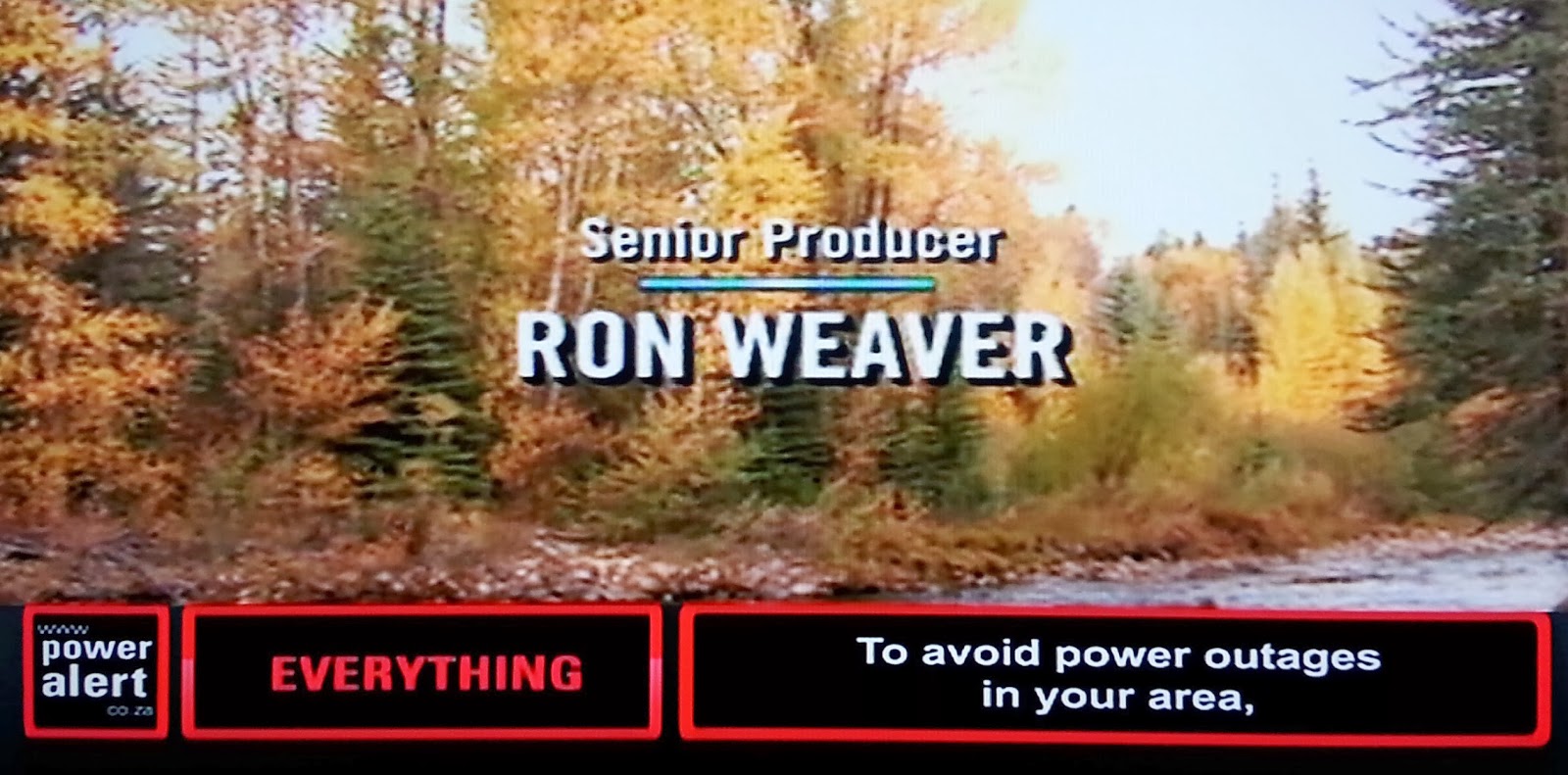
The SABC tells viewers: Switch off EVERYTHING because Eskom is out of power (even though it will presumably impact their ratings).


Now I've seen everything: The SABC is telling its own viewers, in Eskom banner ads running on the SABC channels, to "please switch off everything".

Yes.The SABC is instructing its viewers to turn of "everything" in Eskom commercials - something which will obviously impact SABC TV ratings when viewers well, switch off their TV sets.

The SABC appears unperturbed about the impact of telling viewers in red on-screen banner messages to "switch off everything".

Obviously the SABC has cut a deal with Eskom to run the intrusive daily banners, which on Tuesday evening turned red after Eskom warned earlier that there might not be enough electricity capacity in South Africa due to maintenance issues.

Besides the abnormal Eskom - so unlike a "normal" company which will always actually advertise to users and consumers to please buy and use more, not less - the SABC's deal with Eskom shouldn't come at the SABC's own expense.

Why would the SABC run something which could lead to its own possible viewership loss and its own ratings being impacted negatively?

For the SABC to tell viewers to "please switch off everything" impacts the SABC in a negative way.

The SABC willingly helps its competitors by giving M-Net, DStv, TopTV, e.tv and community TV stations a bigger share of the remaining viewers when people whose TV sets are tuned to the SABC, follow the on-screen lurid prompts and switch their SABC-tuned TV sets off.

Less of the remaining TV sets which are then still turned on, will be tuned to the SABC.

Wednesday, May 15, 2013

SABC and Eskom to start a 'Power Bulletin' telling viewers not to use Eskom and to switch things off in the house ... but not the television.


Eskom is going to pay the SABC to run what the failing electricity giant is calling "Power Bulletins", telling SABC TV viewers to not use Eskom, while the SABC informs viewers to switch things in the house off - just not the television set.

Both the failing parastatals, mired in overspending, struggling to get their budgets under control and behind on  promises of infrastructure investment ranging from power stations to digital television broadcasting services are not going to work together to tell South African TV viewers to use less electricity.

Where other electricity utilities in the world spend money to advertise and market their service to get people to use more power, Eskom has decided to spend more to get South Africans to use less.

The SABC and Eskom will now run Power Bulletins on SABC1, SABC2 and SABC3 in the mornings, in the afternoons and during early primetime starting at 17:30 to 19:30.

The Eskom Power Bulletins will look like the weather forecast format of SABC television and will be one minute long. Power Bulletins will run on weekdays on all three the SABC channels.

The Power Bulletins don't replace, but is in addition to Eskom and the SABC's existing Power Alert campaign which fills the bottom third of viewers' TV screens and often obscure visual details of TV shows and intrude on viewers' TV watching experience.

 The Power Alerts already run on the eNCA (DStv 403), e.tv, various DStv channels on MultiChoice's satellite pay-TV platform and SABC1, SABC2 and SABC3.

Eskom and the SABC will advise TV viewers to switch off geysers, pool pumps, lights, electrical heaters and all appliances not in use, but will never tell TV viewers to switch off the TV.

Malusi Gigaba, the minister of public enterprises calls the Power Bulletins an "exciting initiative" in a spress statement which will "educate and inform consumers about the country's electricity status".