Showing posts with label audience share. Show all posts

Monday, November 7, 2022

SABC's prime time TV audience share falls to below a third in 2021/2022 as just 18% of households bother to pay their SABC TV Licence fee.


by Thinus Ferreira

At less than a fifth, just 18% of South African TV households the broadcaster happens to be aware of,  still bother to pay their annual SABC TV licence - as SABC TV viewership and ratings in prime time continue to tank and have now fallen to below a third of the total audience share as viewers abandon what it's showing.

According to the SABC's latest financial report of 2021/2022, only 18.3% of South African TV households on the broadcaster's database still bothered to pay their R265 annual SABC TV Licence - while the SABC spent even more millions during the financial year trying to get South Africans to pay up.

After billing R4.446 billion in total SABC TV Licence fees during its 2021/2022 financial year, the SABC made only R815 million - meaning that a whopping 81.7% of people who have or once had a SABC TV Licence are simply not paying it, known as the fee evasion rate.

Meanwhile, the SABC spent R73 million rand on SABC TV Licence fee collection, which increased R9 million from R64 million in the previous financial year - meaning that the SABC's collection cost rate climbed further from 8.1% to 8.9%.

The SABC says that the "current depressed economic environment resulted in lower collections than anticipated".

The SABC says in its financial report that it wants to do away with the SABC TV Licence and replace it with a levy which it wants private pay-TV operators like MultiChoice to help collect from DStv subscribers - especially DStv subscribers who have TV sets which the SABC doesn't know about and represent millions of TV households.

The SABC has a "known" SABC TV Licence database of just 10.5 million TV households. In reality, there are many millions more South African households with one or more TV sets - households which the broadcaster is not aware of.

The SABC wants to do away with the SABC TV Licence fees and has submitted proposals for a "technology-neutral, device-independent, public media levy to replace the existing television
licence, exempting the indigent", which it wants MultiChoice to help collect as the dominant pay-TV service in South Africa, on the public broadcaster's behalf.


SABC's prime time viewership problem
While the vast majority of South African TV households no longer care to pay a SABC TV Licence, the SABC's dwindling audience in prime time television has fallen further - plunging to below a third of total viewership share.

Just 31% of South African viewers still bothered to watch something on the SABC's TV channels during the 2021/2022 financial year, down further from 35.8% in the previous year. 

It means that two-thirds of viewers now actively avoid, don't want to watch, or can't watch anything on the SABC's SABC1, SABC2 or SABC3 television channels.


The SABC failed in its performance period share targets for each of its TV channels during the financial year, with SABC1 (target: 27%) reaching only 15.47%, SABC2 (target: 12%) reaching only 5.23% due to competition from kykNET (DStv 144) and e.tv, and SABC3 (target: 5%) only managing a paltry 2.11%.

The SABC blames a "combination of a lack of key local properties in key slots, poor marketing, and staff shortages affected performance during the year" and that "aggressive competitors and poor marketing explain the performance achieved". 

For SABC3 "the loss of key local properties without timeous replacements and the re-launch of the channel during Covid-19 adversely impacted the performance of the channel".

SABC3 underdelivered on its target for local content in prime time, while SABC1 continued to repeat YO.TV and as a result the channel underdelivered on local children's quotas.SABC2 repeated children's content and licensed some fresh content, which led to the under-delivery on children's content as well.

The second local drama series for SABC3 was delayed and will only be delivered to the channel at the end of 2022, with SABC3 that is licensing local content from other suppliers to try and help reduce the non-delivery gap.

As a a result, the SABC made less money from advertising since it had fewer viewers. "Advertising revenue declined by 8% due to the decline in audience share," the broadcaster says. 

The SABC's audience share performance problems are due to the "reduced amount of fresh content during the day, as well as less-competitive titles over the weekend that are limited by provided budgets as well as available revenue".

Tuesday, August 18, 2015

New SABC CEO Frans Matlala reveals: SABC struggles to improve audience share, missed most revenue targets, wasteful spending continues.


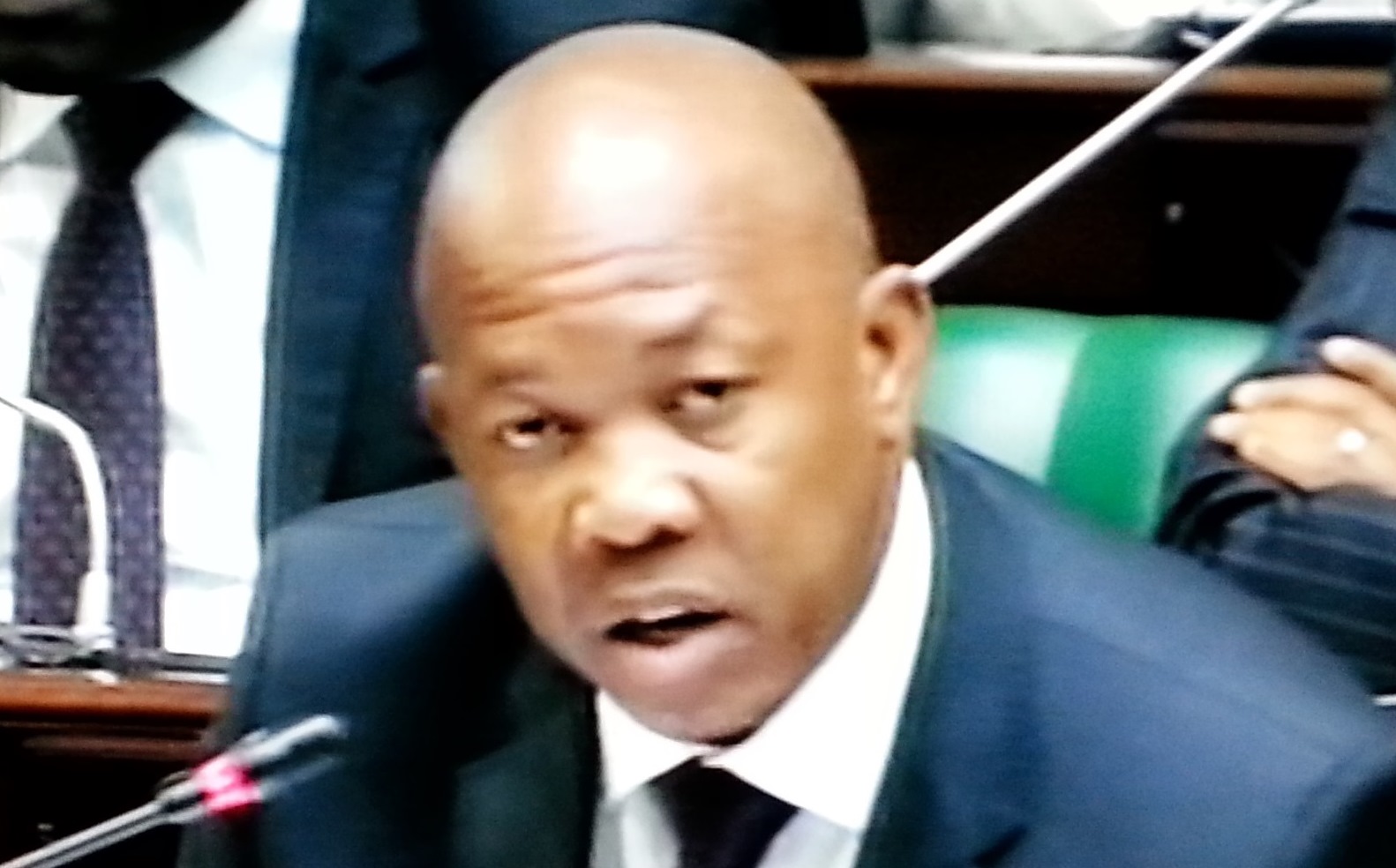
The SABC's new CEO Frans Matlala in his first report to parliament since his appointment revealed that the public broadcaster struggles to improve audience share, that most revenue targets in late 2014 were missed, that the SABC overspend on sport and that wasteful and irregular spending continue to the tune of millions of rand.

Frans Matlala also blamed the bad South African economy and competition, SABC schedule disruptions, as well as the dramatic implosion at the South African Post Office - which is supposed to deliver accounts for SABC TV licenses - for a dip in the public broadcaster's revenues.

In his first performance and expenditure report to parliament as the SABC's new CEO, Frans Matlala today gave the portfolio committee on communications feedback on the SABC's position for the third quarter of 2014.

While the SABC's news report broadcast on SABC News (DStv 404) and SABC3 on Tuesday evening painted a very rosy picture of the public broadcaster and noting how "pleasing" it is to the minister of communications, Faith Muthambi, the story deliberately left out all of the more alarming details of the report back.

None of the following were reported on, or broadcast by, the SABC and SABC News:

The SABC continues to struggle to improve the public broadcaster's TV audience share which remains at 49% - below the set target of 52%. In order words, the SABC failed to lift its audience share as it was supposed to.

It was also revealed in parliament that marketing research done by one of the SABC's broadcasting rivals indicated that the SABC's drop in audience figures is apparently mainly as a result of perceived bias in SABC News coverage.

"During this period we had a challenge - particularly on the SABC TV side with our performance," Frans Matlala admitted to parliament.

"We missed our target by 2% due to two main issues. The one is from just immediately after the World Cup [when] we changed our schedules."

"We moved some programmes from SABC1 to SABC2, which is something that our viewers didn't like very much. And of course we lost audience there."

"The second one was Generations was cancelled [on SABC1] during that particular period and it took us a while to come up with an alternative," said Frans Matlala.

The SABC News channel on the DStv platform for which the public broadcaster receives millions of rand per year, is growing its viewership, but now has a daily average audience of 7 428 viewers.

On the 9 targets the SABC set for itself regarding "human capital" in the third quarter of 2014 the SABC met only 2. Seven were not met "due to capacity constraints and vacancies".


"The third quarter [of 2014] was financially challenging," Frans Matlala revealed to parliament's portfolio committee on communications.

"Our revenue targets, most of them were not met, except for our net financing income," said Frans Matlala. "The total revenue during this period was R2.099 billion - which was lower than budget by 9%."

"There are reasons for this unfavourable performance. A lot of them derive from increased competition, from the fact that most of our clients cut their budgets owing to contractions in the economy," said Frans Matlala.

Frans Matlala also blamed the South African Post Office for damaging SABC TV license revenue collection, saying that the SABC's TV licence fees were below budget".

"We depend on the South African Post Office to mail SABC TV license statements. During this period the Post Office experienced significant strike action."

"There were disruptions to our SABC schedules during this period. And of course the delays in approving the revised SABC licence tariff increase of 6%, which continues to put pressures on our revenues."

The SABC overspent on sport content that was not budgeted for.

Frans Matlala said that the SABC's lower revenues is due to things outside of the SABC's control.

"Its due to reductions in revenue from advertising, sponsorship, trade exchanges, SABC TV licence fees, and a lot of these depend on the appetite by the advertisers."

Frans Matlala revealed that irregular, fruitless and wasteful expenditure at the SABC continues.

During this period the SABC had R2.05 million in irregular expenditure and R820 000 in fruitless and wasteful expenditure, Frans Matlala revealed.

"One of the commitments that we make here is that where there are instances of avoidable wasteful and fruitless expenditure, the leadership of the SABC is always committed to ensure that action and consequences follow," said Frans Matlala.

"During October 2014 the SABC issued an RFP [Request for Proposals for productions] book with a total value of more than R600 million; making it the largest RFB book issued by the SABC for local content yet. It's a significant investment that will support the development of independent local producers," said Frans Matlala.

Some MPs referred to the SABC as "under-achieving".

Although it's in the public interest and members of parliament are tasked with oversight of the SABC, the chairperson of the communications committee on Tuesday blatantly blocked MPs from asking follow-up questions of SABC executives "in the interest of time".

MP Gavin Davis of the Democratic Alliance (DA) refused to back down and remain quiet. He tried to ask his questions of the SABC anyway -although not answered - while the chairman tried to silence him.

"If entities come here and mislead us, we have an obligation to put that right," said Gavin Davis. "Chairperson its unfortunate that you are quite happy to allow entities to come here to mislead us. And we are not even allowed to question them, when they mislead us."

"We are supposed to do oversight of the executives and you feel quite happy ...".

Faith Muthambi told parliament that "we all know and understand that the SABC is a state-owned entity under the guidance of the ANC led government. That's one thing we shouldn't be apologetic of".