Showing posts with label FPB. Show all posts

Wednesday, August 14, 2024

South Africa's Film and Publication Board CEO Mashilo Boloka suspended.


by Thinus Ferreira

South Africa's Film and Publication Board (FPB) has suspended its CEO Dr Mashilo Boloka who has been replaced by Makhosazana Lindhorst for the time being.

Dr Mashilo Boloka was acting FPB CEO for a period until he was appointed full-time in the position in December 2022.

The FPB in response to a media query from TVwithThinus confirmed his suspension.

"FPB CEO Dr Mashilo Boloka has been placed on precautionary suspension with effect from 7 August 2024 until further notice."

"The matter of the precautionary suspension of the FPB CEO is currently being handled by the FPB council in terms of its policies and procedures. In this regard the FPB council is unable to comment on any questions raised on this matter as it may jeopardise the process and impact on the rights of affected employees."

"The FPB council is giving this matter urgent attention and will communicate with its stakeholders including the media as soon as the process is concluded. We urge your understanding and patience in allowing due process to take its course."


Monday, July 29, 2024

Filmmaker Anant Singh and cartoonist Zapiro slam South Africa's 'censor panel' for 16LNPSV rating of documentary The Showerhead, plan appeal.


by Thinus Ferreira

Filmmaker Anant Singh and cartoonist Zapiro are slamming South Africa's Film and Publication Board over as 16LNPSV rating for their new documentary feature film The Showerhead and say they will appeal the rating of the "censor panel" early this week.

The Showerhead, directed by Craig Tanner and produced by Videovision Entertainment, had its world premiere Saturday night at the 45th Durban International Film Festival (DIFF) but has been slapped with a punitive 16LNPSV rating over its content.

It means that The Showerhead - a documentary profile of the cartoonist Jonathan Shapiro known as Zapiro - will be seen and accessible by a much smaller potential audience when it's released in cinemas in September.

The FPB's 16LNPSV rating means that The Showerhead contains occurrences of moderate and possibly strong impact sexual activity, strong offensive language, nudity, prejudice, sex and violence.

Videovision Entertainment which produced the film will lodge an appeal with the Appeals Tribunal early this week.

The Showerhead title comes from Zapiro who started drawing former South African president Jacob Zuma with a showerhead following his 2006 rape trial where he admitted that he had sex with a young HIV-infected woman. Zuma said that he showered afterwards to prevent himself from getting HIV/Aids.

The Showerhead is a profile documentary of Jonathan Shapiro's life and tells his story as a liberation artist and a political detainee during Apartheid, to his emergence as a defender of freedom of expression and his no-holds-barred career as a cartoonist.

The Showerhead, through a series of interviews, explores how Zapiro's cartoons have captured the essence of a variety of issues plaguing South Africa in the post-Nelson Mandela period like corruption and threats to freedom of expression.

Craig Tanner says "The irony of a film about freedom of expression having extreme restrictions placed upon those who might wish to see it is plainly lost on the guardians who sit on this censorship panel, purporting to discharge what they consider to be their duty of ensuring that young minds are not troubled or encouraged to think".

"Suppression of The Showerhead on the basis that it involves sex and violence illustrates that the members of this panel have failed to appreciate the distinction between gratuitous depiction of such activities and use of metaphor as a creative device to explain social and political issues."

"These are, after all, cartoons that have been published in newspapers, are familiar images in the public domain, and have been the subject of discussion, delight, offence and litigation on the national stage for years."

Jonathan Shapiro says he was "genuinely taken aback and extremely disappointed when told that The Showerhead has been given a 16 age restriction".

"To describe this restriction as an overreaction on the part of the censorship panel would be an understatement. A panel such as this one, misconstruing the nature of this movie in this way is reminiscent of the kind of restrictions imposed on us during the apartheid era by the old censorship board. I hoped we had progressed somewhat beyond this."

He says "A 16 rating also removes the possibility of showing the movie in schools where my cartoons are widely used in classrooms, in exam papers and in textbooks and in a number of subjects: history, art, economics, English and other languages".

"I have often shown the most controversial cartoons in this movie at school presentations where I have encountered young people engaging in the issues raised by the cartoons. Trying to suppress young people from thinking, engaging and questioning is not only futile but, in my opinion, reactionary. I earnestly hope that the appeal board will assign a more appropriate rating."

Producer Anant Singh says "The films that Videovision and I have produced, and distributed, have always been at the forefront of telling stories that supported freedom of expression and spoke out against injustices. Jonathan has done the same with his cartoons over the last four decades".

"This rating goes against the very essence of Jonathan's work and is a threat to freedom of expression in our land. It also goes against the clear directive of our constitution.  We hope the appeal is successful and removes all the restrictions."

The FPB was asked several questions over the rating and for comment over the weekend. 

Obakeng Maimane, FBP campaign and outreach coordinator, on Monday said "We are unable to comment as an appeal has been lodged with the Film and Publication Board".

Tuesday, March 15, 2022

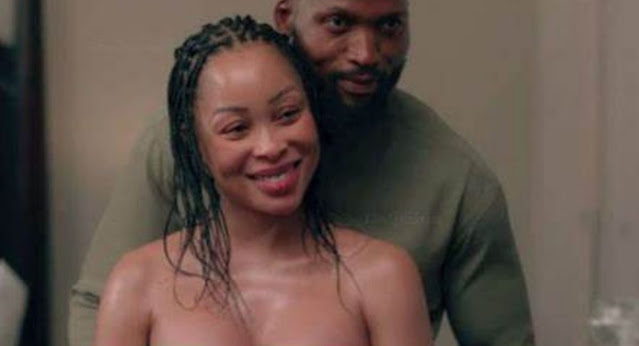
South Africa's Film and Publication Board launches review of Showmax’s 16 VSNL rating after The Wife’s lurid sex scene between Khanyi Mbau and Mondli Makhoba shocks viewers.


by Thinus Ferreira

South Africa's Film and Publication Board (FPB) is using the country's new Film and Publications Amendment Act, known as the "Internet Censorship Act", to launch a review of the 16 VSNL content classification of Showmax's local telenovela The Wife after "online public concerns" following last week's lurid sex scene between Khanyi Mbau and Mondli Makhoba that shocked viewers.

Showmax subscribers were quick to record the graphic sex scene on their mobile phones and to make screengrabs which were then posted across social media like Twitter and Facebook, and shared on Whatsapp.

President Cyril Ramaphosa made the FPB's controversial Film and Publications Amendment Act, dubbed the "Internet Censorship Bill" and "Internet Censorship Act" law on 1 March this year. 

The new law gives expanded powers to the FPB to clamp down on online content in South Africa and expanding the scope of the FPB far beyond classifying and regulating TV and film content but also to act as a regulator of almost all online content - including social media - published in South Africa.

The FPB says that as a "preliminary step" and following "online public concerns regarding an episode of the Showmax series The Wife" it brought it to MultiChoice's attention that it's reviewing the compliance of its video streaming service with the FPB's ratings system, with MultiChoice that has the "opportunity to respond to these in writing in 7 days".

Showmax self-classified The Wife as 16 VSNL which it is allowed to but the FPB says it has the power through the Act, to to regularly audit the distributor's compliance with its rating system and hear and/or adjudicate public complaints regarding classified material".

"The 16 VSNL assigned by Showmax to The Wife will be compliance checked against the justification given by Showmax in the classification report that all distributors with online distributor agreements to self-classify need to complete," the FPB says.

"Should the review of the classification rating of the episode be found to incorrect, the FPB has the powers in terms of section 18J of the FP Amendment Act to reclassify any material that was previously classified in terms of the Act."

Dr Mashilo Boloka, FPB acting CEO, says that the FPB is "worried about the distribution and wider circulation of this clip by members of the public via social media".

"These clips have the potential to cause harm if accessed by children on unregulated online platforms."

"The Films and Publications Amendment Act does not in any way limit the sharing of content by members of the public as long as the content is not harmful, illegal and/or prohibited by the Act. We will in due course publish guidelines relating to the sharing of content via digital platforms to the members of the public so that they know what is permissible within the new law," Mashilo Boloka says.

"The spread of this material on social media platforms underlines the need for vigilance by the FPB to curb the illegal distribution of harmful and prohibited materials so as to protect the public, including children."

"We are putting in systems to monitor non-compliance with the new act, including the Online Rapid Response Team and the Enforcement Committee."

Laura Cooke, Showmax head of publicity, told TVwithThinus on Tuesday morning in response to a media query that "Showmax has noted the media statement of the Film and Publication Board regarding The Wife".

"All our shows are rated according to the FPB classification guidelines. We will provide the FPB our response within the required time-frame."

Friday, February 26, 2021

After 5 years Netflix South Africa adds and now shows the local Film and Publications Board's age restrictions and content classification advisories.

by Thinus Ferreira

Five years after Netflix launched in South Africa the global video streaming service this week started adding local South Africa age restrictions to the content that it is making available in the country and with its content ratings that now includes those of the Film & Publications Board (FPB) as well.

FPB age restrictions and parental advisories now form part of Netflix SA content in the form of FPB triangle symbols denoting an age restriction in numbers, as well as content labels in the form of "S" for sex, "V" for violence", "N" for nudity", "L" for language" and several more.

Netflix's biggest rival in Africa, MultiChoice's Showmax, already incorporated the FPB classification system years ago.

When Netflix launched across Africa in January 2016 the global subscription video-on-demand service (SVOD) initially did so on the continent without adhering to individual countries' content classification systems like what exists in South Africa.

Netflix pushed back against calls to have its available content catalogue locally classified. This had not so much to do with the actual classification process but with the fact that video content operators have to pay hundreds of thousands of rand per year for local classification to local classification bodies, like for instance the FPB.

In October 2017 Netflix EMEA told TVwithThinus that Netflix won't submit to local classification of its content which it does itself and "doesn't have to pay those fees".

At the time Netflix said that "We do believe that we do not have to do that. And that's the same case in many countries in the world where they have content regulation and there's questions about ratings, or censorship."

"There's always a wish from a regulator to try to get power from things like video streaming services, and we're trying to move away from that because we do think that the content matters and we try not to censor content in general."

Netflix said "We want the freedom to regulate ourselves. When there are layers of complexities it's never good; it's just slowing the technology; everything."

In early-2020 Netflix bowed under pressure from the FPB and agreed to South Africa's local content classification rules and pay the classification body. Netflix won't make back-payments for anything for the period between 2016 and 2020 where its service was available in South Africa without content classification.

Now that change has become visible. On Netflix's help page for maturity ratings and classifications for South Africa specifically, Netflix now lists, explains and shows the FPB maturity ratings and classifications.

Netflix SA subscribers now see an FPB icon appearing, along with the appropriate age number.

Netflix SA subscribers will now also see updated content advisories on titles and Netflix confirmed that it will be using the themes identified in the FPB guidelines, as well as the added-context advisories currently available on Netflix.

A Netflix spokesperson in response to a media enquiry told TVwithThinus that "Our work with the Film and Publications Board is part of our wider efforts to give our members more control and choice".

"We want our members in South Africa to have the information they need to make informed entertainment choices for themselves and their families."


Tuesday, March 3, 2020

Netflix bows under pressure from South Africa's Film and Publication Board; will now pay the FPB R795 000 per year for local classification of video streaming service's content.


by Thinus Ferreira

Netflix has bowed under pressure from the Film and Publication Board (FPB) and will now classify the content on the video streaming service according to South Africa's local content classification rules and pay the classification body.

Unlike MultiChoice's Showmax subscription video-on-demand (SVOD) service, Nu Metro, Ster-Kinekor and Apple TV+, Netflix refused for four years to refuse to register its content for FPB classification, to abide by its rules and to pay for local content classification since it launched in January 2016 in South Africa and across sub-Saharan Africa.

In October 2017 Yann Lafargue, manager for technology and corporate communications at Netflix for the Europe, Middle East and Africa (EMEA) region, told TVwithThinus that Netflix won't submit to local classification of its content which it does itself and "doesn't have to pay those fees".

"We do believe that we do not have to do that. And that's the same case in many countries in the world where they have content regulation and there's questions about ratings, or censorship."

"There's always a wish from a regulator to try to get power from things like video streaming services, and we're trying to move away from that because we do think that the content matters and we try not to censor content in general."

Yann Lafargue said "We want the freedom to regulate ourselves. When there's layers of complexities it's never good; it's just slowing the technology; everything. Imagine if you have that [process of screening] and then you need to wait 6 months because they don't have the capacity or the bandwidth to watch all the content of 650 shows - not even talking about the licensed shows we have there, then you become again a second-ranked citizen because of your own regulator. And then there's again the issue of piracy."

Now Netflix has bowed under FPB pressure and will have to pay a licensing fee of R795 000 per year for the local classification of its content after it signed a FBP deal last week.

Netflix won't be paying anything for the period between 2016 and 2020 where its service was available in South Africa without content classification.

Netflix's deal with the Film and Publication Board comes as the streamer realised that it will run into growing problems if it doesn't pay for local content classification as it increases local South African productions like Queen Sono that it released last week, as well as with upcoming South African series and elsewhere in Africa like Nigeria where it has plans to do more scripted programming.

"The Film and Publication Board is delighted to welcome Netflix onboard licensed online content distributing platforms, following the recent signing of a distribution agreement between both parties," says Abongile Mashele, FPB acting CEO in a statement.

"Netflix joins the likes of Showmax, Google and Apple to become the 9th online distributor to contract with the FPB, ensuring compliance with the Film and Publications Act, and the classification guidelines."

"These classification guidelines are aligned with social norms and values as tested with the South African public, aimed at providing advisories and age ratings that protect children and other vulnerable consumers."

Abongile Mashele says that "the signing of this contract is the culmination of a series of discussions on the prioritisation of safe content consumption for our citizens, where materials distributed in the country are accompanied by ratings that prepare the consumer for the type of content they are about to view. This allows parents and caregivers to make informed choices on the content to which their children are exposed."

The Film and Publication Amendment Act requires all distributors of films, games, and certain publications to register with the FPB to ensure that their materials are classified prior to reaching the consumer.

South African consumers then see a FPB classification triangle with an age rating, as well as a consumer advisory notification, for instance "S" for sex, "V" for violence, "N" for nudity and so on.

"Following the signing of the distributor contract the FPB will engage Netflix in intensive training on the classification guidelines and the methodology of self-classification before the ratings can be applied," the FPB says.

"The public can rest assured that the films they view on Netflix will be aligned to South African rating standards."

Netflix in a statement says "Our work with the Film and Publications Board is part of our wider efforts to give our members more control and choice. We want our members in South Africa to have the information they need to make informed entertainment choices for themselves and their families".

Thursday, October 19, 2017

Netflix on why it isn't paying the South African Film and Publication Board licensing fee: 'We don't have to pay those fees'.


Netflix, on why it isn't paying the licensing fees for its content made available in South Africa to consumers as required by the South African Film and Publication Board (FPB), has a quite blunt response: "We don't have to".

Netflix says the global video streaming giant doesn't believe that it has to pay South Africa's FPB anything.

Netflix that has so far refused to register with the FPB since it launched in South Africa and across Africa in January 2016, "owes" the FPB more than R1.59 million in unpaid licensing fees.

The FPB screens and provides an age restriction and parental guidance system to content as part of its content classification system.

MultiChoice for its DStv satellite pay-TV service including DStv BoxOffice, and Apple iTunes are paying their FPB licensing fees.

So are the subscription video-on-demand (SVOD) services like Naspers' Showmax and PCCW Global's ONTAPtv.com.

The South African Film and Publication Board recently released a draft review of its licensing fee tariff scale for online distributors in South Africa, suggesting adjustments that will end up costing Netflix even more to have its content be available in South Africa.

The South African government is furthermore hell-bent on "regulating" global online video services like Netflix and YouTube.

The department of communications will shortly release a draft Audio-Visual and Digital Content Policy for SA in parliament for public comment.

Other African nations likewise want Netflix as a global video golden goose to pay up in terms of license fees or be gone.

The Kenya Film Classification Board (KFCB) for instance has threatened to ban Netflix over its refusal to be "properly licensed" in Kenya and called Netflix "a threat to moral values and national security" in the East African nation.


On Wednesday Netflix spoke to South Africa media and answered questions from the press at its first Netflix House SA media event in Cape Town and TVwithThinus asked Netflix why it isn't paying the FPB licensing fee as required.

"We're an over-the-top (OTT) service, we're not a broadcaster; we're not licensed spectrum, or granted specific wavelengths to broadcast on," said Yann Lafargue, manager for technology and corporate communications at Netflix for the Europe, Middle East and Africa (EMEA) region.

"We're also not linear television where we have obligations to have certain content, with regulations and content quotas. We're omnipresent, so basically it's a different ball-game - and we don't have to pay those fees."

Yann Lafargue said "some of them argue that we should, and we are in contact with them. We do believe that we do not have to do that. And that's the same case in many countries in the world where they have content regulation and there's questions about ratings, or censorship."

"There's always a wish from a regulator to try to get power from things like video streaming services, and we're trying to move away from that because we do think that the content matters and we try not to censor content in general."

"If we have to pay a fee and its legally binding, we always respect the laws of a country where we operate. Right now, we don't have to."

"To be fair, the amount we should pay isn't necessarily big, but it's the question of why pay something if you don't have to?"

"We will rather invest the money in a local Netflix original show or content, like a Trevor Noah stand-up show rather than just put money where we don't have to."


'We don't want a cumbersome system'
When TVwithThinus asked if Netflix doesn't believe that something like the South African Film and Publications Board should set local parental and age restrictions for films and content that's suitable for South Africa's unique socio-demographic and cultural circumstances, Yann Lafargue said Netflix self-regulates.

"In some cases where there's something different we will have a discussion with the ratings board, and in some countries they are stricter than others. Like in Singapore for instance, or South Korea, they are very stringent."

"You can have a 12 [parental guidance] for something and then it's going to be 18 for that somewhere else. We're trying to make sure that we're empowering customers based on the country."

"There's no point in us forcing something down your throat if we think we're not ready. So we're open to discussion," said Yann Lafargue.

"What we don't want is to have - imagine, we have thousands of titles on Netflix - is to have a cumbersome system where you have to give them the content, and they need to watch it and decide whatever, and to then be consistent. It's complicated."

"It's a bit messy so we're trying to do things by ourselves. But what we're doing in some markets is we're trying to show them, and ask 'For those shows, what would be the ratings?' And we try to self-right ourselves to close the discrepancy."

"So we're trying to understand, and to be a good company and good corporate citizen in general."

"If someone thinks that if there's violence or nudity, automatically it needs to be [age restricted] above 16 we'll do it, we have no issue with that," said Yann Lafargue.

"We want the freedom to regulate ourselves. When there's layers of complexities it's never good; it's just slowing the technology; everything."

"Imagine if you have that [process of screening] and then you need to wait 6 months because they don't have the capacity or the bandwidth to watch all the content of 650 shows - not even talking about the licensed shows we have there, then you become again a second-ranked citizen because of your own regulator. And then there's again the issue of piracy."   

Thursday, January 21, 2016

Kenya threatens to block Netflix, says 'unregulated arrival' of the global video streaming service 'is a threat to our moral values and national security'.


Kenya is threatening to block Netflix two weeks after the "unregulated arrival" of the global video streaming giant's service across Africa, with Kenya now slamming Netflix as "a threat to our moral values and national security" for showing extreme violence and nudity and promoting irresponsible sexual behaviour and drug abuse.

Kenya's Netflix fury comes three months after Nigeria in October 2015 forced satellite pay-TV provider MultiChoice and Discovery Networks International (DNI) to abruptly pull the transgender teen reality show I Am Jazz from its TLC Entertainment (DStv 172) channel for allegedly "promoting undesirable ideas that will offend the Nigerian public".

Since there's only one TLC Entertainment channel feed for the entire Africa, the Nigerian threat and resultant censorship and removal from the schedule mean that the entire Africa was prevented from seeing the show.

Now another African nation is up in arms about global TV content funneled to conservative African viewers who are sensitive over on-air depictions of sex, nudity, language and violence.

The Kenya Film Classification Board (KFCB) is now threatening to block Netflix in Kenya, saying its "a threat to our moral values and national security" because Netflix fails to conform to Kenya's ratings and classification regulations as provided in law.

Interestingly Netflix content in South Africa has also not been classified by the Film and Publication Board (FPB), although the Naspers rival ShowMax does contain, show and adhere to the FPB classification system for the country.

At a press conference in Nairobi, Bishop Jackson Kipkemoi Kosgei, chairperson of the classification board, said Netflix must be subjected to Kenya's rules and regulations and that Netflix's content is classified and rated on a system that is at odds with Kenya's regulatory and film classification standards.

"The board regards this development as a gross contravention of the laws governing film and broadcast content distribution in Kenya," says the board, noting that "as Kenyans, we therefore need to ask all the right questions about the unregulated arrival and future of Netflix in the country".

According to the East African country's film classification board, content that Netflix deems fine for 13-year olds "contain classifiable elements such as extreme violence, nudity, promotion of irresponsible sexual behaviour, inappropriate language and drug abuse".

"As a progressive country, we cannot afford to be passive recipients of foreign content that could corrupt the moral values of our children and compromise our national security," said Kosgei.

"It will be against our mandate to allow our children to get ruined by inappropriate content in the name of profit".

Netflix in a statement says that its not a traditional broadcaster not an internet television network.

"We empower consumers to make smart viewing choices by providing details on the titles on Netflix, including ratings and episode synopses. We also provide parental controls".

Besides thousands of hours of content that's not available on Netflix in South Africa and the rest of Africa due to licensing rights not being available and making for an already reduced content offering, Netflix has toned down the sex and nudity when it launched in Africa earlier this month, culling a large number of titles that falls under the banner of "erotica" and that contains nudity and sex.

Although Netflix has is able to offer this programming and has no licensing rights impediment as with some other programming, its notable that the streaming service isn't making this content available in Africa.

Wednesday, March 11, 2015

BREAKING. Shocking internet censorship looms for all South African websites, internet publications, blogs - even Facebook postings.


Dangerous internet censorship looms for all South African websites, internet publications, in fact anything published in South Africa from blogs, even Facebook – in a shocking new draft Online Regulation Policy gazetted by the Film and Publications Board (FPB).

Through the proposed regulations, a clampdown on freedom of speech looms for all internet publishers in South Africa and anyone in the country writing a blog or even doing a Facebook posting.

The civil society watchdog organisation, The Right2Know Campaign, in a strongly-worded statement, is now warning South Africa, the media and citizens, and demanding that the FPB scrap the draft Online Regulation Policy document which was gazetted on 4 March.

The watchdog organisations says the FBP must stop the attempt to exercise "pre-publication censorship" of the internet in South Africa.

According to the Right2Know Campaign, the censorship regulations would infrige on the South African public's right to freely get information – as well as to impart information – a right enshrined in the South African Constitution.

"The target of this regulation is not just major distributors, but also individuals," says the Right2Know Campaign. "In terms of the wording of the document, everything published on the internet – including blogs, personal websites and Facebook pages".


Online distribution agreement
According to the document, anyone in South Africa – from individuals to publishers and media organisations – who wish to publish or distribute content will have to first "apply" for a "digital publisher's online distribution agreement" with the Film and Publication Board. 

This will require a subscription fee.

In addition, once paid, the publisher would have to submit the content to the FPB for classification prior to publishing. "This effectively is a specific form of pre-publication censorship, which is not acceptable," says the Right2Know Campaign.

"Moreover, the time spent on the pre-classification of content would undermine one of the most valuable traits of the internet – its immediacy."

"There is also a very real threat that in the future, organisations lacking in resources and unable to afford costly subscription fees, such as community-oriented news outlets and civil society groups, will be severely hampered by the unnecessarily bureaucratic regulations envisioned by the FPB."

"These online media outlets provide a valuable contribution to the diversity of the South African media landscape. The FPB draft regulations will disenable this diversity."


'Classifiers' dispatched to your premises
The Right2Know Campaign says that "worryingly, the regulations would allow the FPB to dispatch classifiers to the distributors' premises for the purposes of classifying digital content."

Furthermore "distributors would have to ensure that the work of classifiers takes place unhindered and without interference."

"The vague wording of the regulations would allow for 'classifiers’ to visit, for example, the homes of citizen journalists and ordinary internet users. Such sweeping powers reek of apartheid-era censorship, whose advocates similarly relied on the guise of moralising arguments," says the Right2Know Campaign.


'Ignorance of how the internet works'
The Right2Know Campaign says the shocking draft regulations "reveals a massive ignorance on the part of the FPB on how the internet actually works."

The Right2Know Campaign says "the FPB has failed to adequately consult with relevant stakeholders before drafting the document."

"Only industry stakeholders were invited to participate behind closed doors, while civil society was excluded from the process despite the fact that the regulations could have profound consequences for ordinary members of the public."

"The Right2Know Campaign condemns this latest attempt to broaden the power of authorities to censor and restrict publishable content — the sort of action characteristic of an increasingly overbearing, paranoid and insecure state."

"The Right2Know Campaign demands that the Film and Publications Board immediately withdraw the draft online regulation policy document."

"The FPB must desist from any attempt to regulate internet content. We already have laws to protect our children, and laws on hate speech. The FPB's draft online regulations smack of unnecessary censorship, are unconstitutional and must be scrapped."